


Every day, businesses and individuals generate massive amounts of digital information. From online banking and shopping to social media and healthcare records, our personal data is stored across countless platforms. While this digital world offers convenience, it also introduces significant security risks. One of the biggest threats is a data breach.
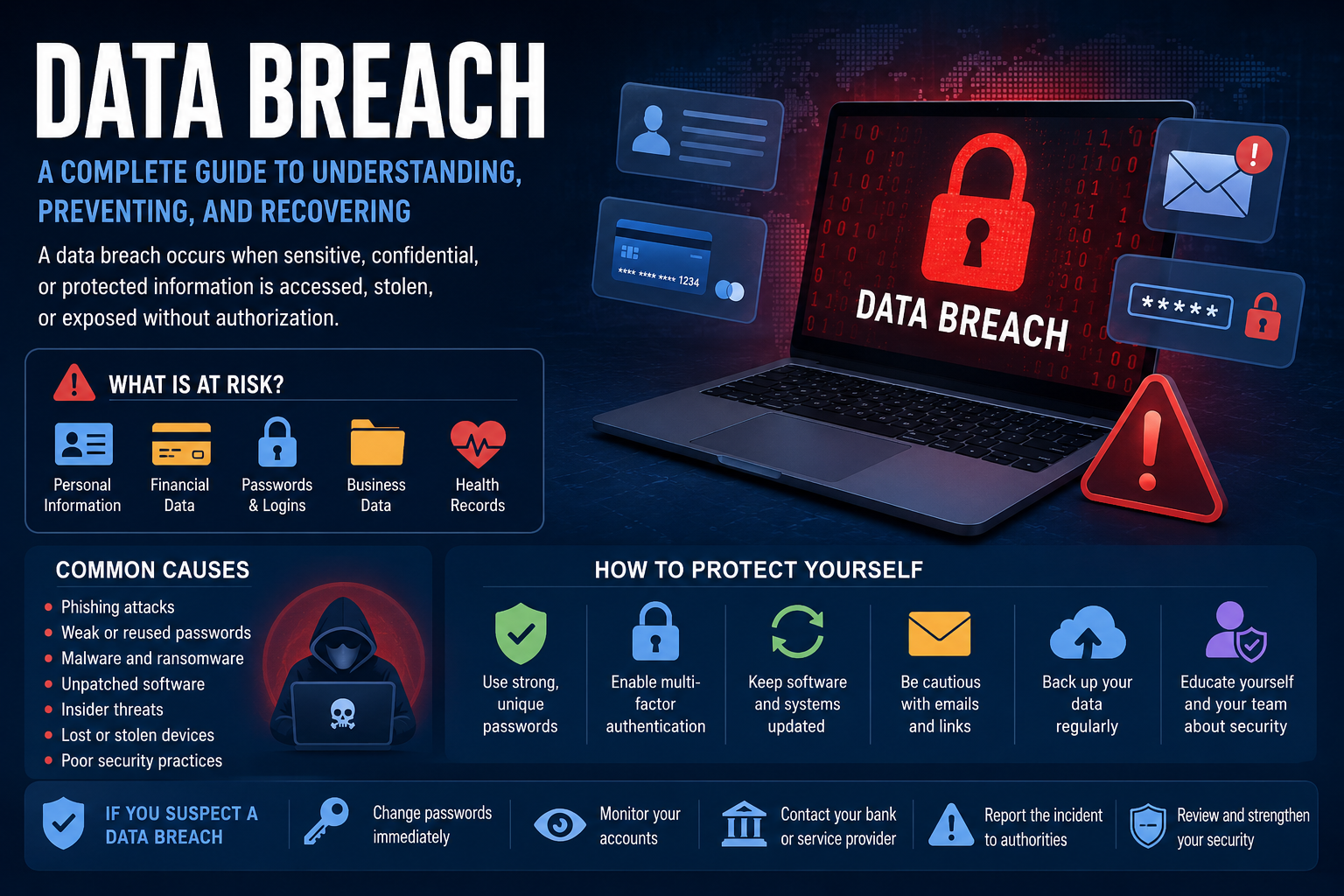
A data breach occurs when confidential, sensitive, or protected information is accessed, stolen, or exposed without authorization. Whether it involves a multinational corporation or a small business, the consequences can be severe, affecting finances, privacy, and trust.
This complete guide explains everything you need to know about a data breach, including how it happens, why it occurs, its impact, prevention strategies, and the steps you should take if your information is compromised.
What Is a Data Breach?
A data breach is a security incident in which unauthorized individuals gain access to confidential information. The stolen information may include passwords, financial records, personal identification details, medical information, or company trade secrets.
Unlike a simple computer malfunction, a data breach involves unauthorized exposure of information that should remain private. Cybercriminals often target valuable data because it can be sold, used for identity theft, or exploited for financial gain.
Not every security incident results in a data breach, but every organization should treat suspicious activity seriously. Early detection often limits the damage and reduces recovery costs.
How Does a Data Breach Happen?
Cybercriminals use a variety of methods to gain unauthorized access to sensitive information. Understanding these attack methods is the first step toward preventing a data breach.
Phishing attacks remain one of the most common techniques. Attackers send convincing emails or messages that trick users into revealing passwords or downloading malicious software. Even experienced users can occasionally fall victim to sophisticated phishing campaigns.
Weak passwords also contribute significantly to many incidents. Passwords that are short, predictable, or reused across multiple accounts make it much easier for attackers to compromise systems.
Outdated software presents another major risk. Security vulnerabilities discovered in older software versions are frequently exploited by hackers if organizations fail to install updates promptly.
Common Types of Data Breaches
Not every data breach occurs in the same way. Different attack methods require different defensive strategies.
External attacks involve hackers breaking into systems through the internet. These attacks often use malware, ransomware, credential theft, or software vulnerabilities to gain access.
Internal breaches occur when employees or contractors intentionally or accidentally expose confidential information. Sometimes a misplaced laptop or an email sent to the wrong recipient is enough to trigger a serious incident.
Cloud storage misconfigurations have become increasingly common. Incorrect permissions may accidentally expose sensitive files to the public without any hacking taking place.
The Impact of a Data Breach
The consequences of a data breach extend far beyond the initial theft of information. Individuals and businesses often face long-term challenges after an incident.
Financial losses can include fraudulent purchases, legal expenses, regulatory penalties, recovery costs, and reduced customer confidence. For businesses, these expenses may reach millions of dollars depending on the size of the incident.
Personal victims may experience identity theft, unauthorized bank transactions, damaged credit scores, and ongoing privacy concerns. Recovering from identity theft can take months or even years.
Organizations also suffer reputational damage. Customers expect companies to protect their personal information, and losing that trust can significantly affect future business growth.
Warning Signs That a Data Breach May Have Occurred
Recognizing early warning signs allows quicker action before additional damage occurs.
Unexpected password reset emails, login alerts from unfamiliar locations, or notifications about unusual account activity should never be ignored. These alerts often indicate someone is attempting unauthorized access.
Businesses should monitor unusual network traffic, unexpected system slowdowns, unknown administrator accounts, and unexplained file transfers. These technical indicators may signal an active intrusion.
Customers should also watch for unfamiliar financial transactions, missing emails, or accounts suddenly becoming inaccessible. Prompt reporting can reduce financial losses.
How to Prevent a Data Breach
Preventing a data breach requires a combination of technology, employee awareness, and good cybersecurity habits.
Strong, unique passwords combined with multi-factor authentication significantly reduce the likelihood of unauthorized access. Password managers can help users create and store complex credentials securely.
Keeping operating systems, applications, and security software updated closes known vulnerabilities before attackers can exploit them. Automatic updates provide an additional layer of protection.
Employee cybersecurity training is equally important. Staff members who understand phishing scams, suspicious links, and safe data handling practices become the organization’s first line of defense.
What to Do After a Data Breach
Quick action can minimize the damage caused by a data breach.
Immediately change affected passwords and enable multi-factor authentication wherever available. If financial information has been compromised, contact your bank or credit card provider without delay.
Monitor your accounts regularly for suspicious activity. Credit monitoring services can provide alerts if someone attempts to misuse your personal information.
Organizations should investigate the source of the breach, isolate affected systems, notify impacted individuals when required by law, and strengthen security measures to prevent future incidents.
Best Practices for Businesses
Businesses face increasing cybersecurity threats every year, making proactive planning essential.
Developing an incident response plan ensures every employee understands their role during a security event. A well-prepared response often reduces downtime and financial losses.
Regular security audits help identify vulnerabilities before attackers discover them. Penetration testing and vulnerability assessments provide valuable insight into potential weaknesses.
Encrypting sensitive information, limiting employee access based on job responsibilities, and maintaining secure backups further reduce the potential impact of a data breach.
Future Trends in Data Breach Prevention
Cybersecurity continues evolving as attackers develop new techniques and organizations adopt stronger defenses.
Artificial intelligence is increasingly used to detect unusual network behavior and identify threats before they become major incidents. Automated monitoring allows faster response times.
Zero Trust security models are becoming more common. Rather than automatically trusting users inside a network, every access request is verified continuously.
Privacy regulations around the world are also encouraging organizations to improve data protection practices, benefiting both businesses and consumers.
Conclusion
A data breach is no longer a rare cybersecurity event—it is a growing challenge that affects organizations and individuals worldwide. As technology advances, so do the methods used by cybercriminals, making strong security practices more important than ever.
Fortunately, many breaches can be prevented through good cybersecurity habits, regular software updates, employee awareness, strong passwords, and multi-factor authentication. Taking proactive steps today is far easier than recovering from stolen information tomorrow.
Whether you are protecting personal information or managing sensitive business data, understanding how a data breach happens and knowing how to respond will help reduce risks and improve your overall digital security. Staying informed, remaining cautious online, and following proven security practices are the best ways to protect yourself in an increasingly connected world.