


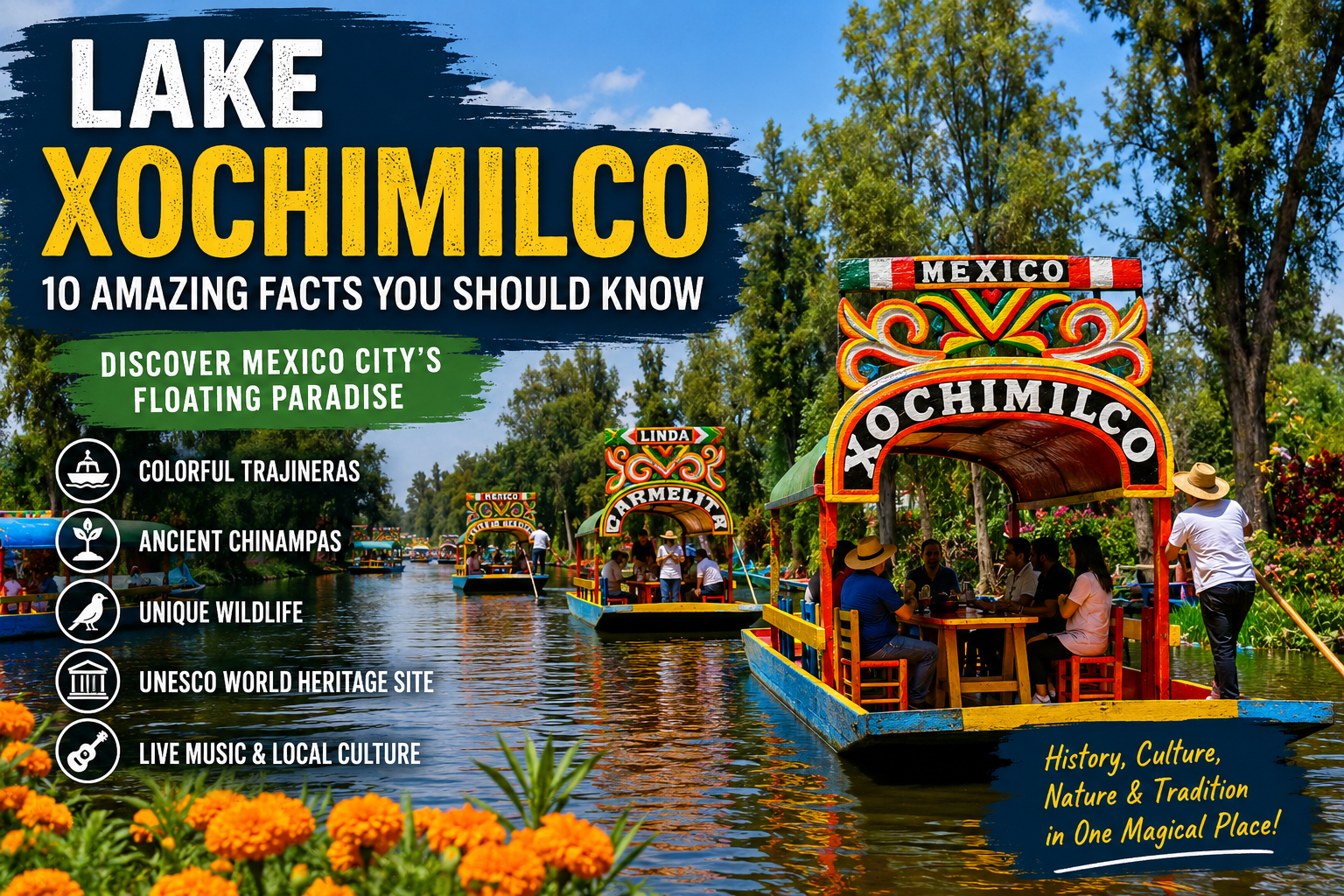
Lake Xochimilco is one of the most remarkable destinations in Mexico, offering visitors a unique combination of natural beauty, cultural heritage, and centuries-old traditions. Located in the southern part of Mexico City, this historic lake is famous for its colorful floating boats, known as trajineras, and its ancient canal system that dates back to the time of the Aztec civilization. Unlike many tourist attractions that have evolved only in recent decades, Lake Xochimilco has preserved its historical significance while continuing to serve as an important cultural landmark.
The lake is much more than a scenic destination. It represents one of the last remaining pieces of the vast lake system that once covered the Valley of Mexico. Today, visitors from around the world come to experience peaceful boat rides, traditional Mexican music, local cuisine, and the fascinating agricultural islands known as chinampas, often referred to as floating gardens.
Whether you’re planning a trip, researching Mexican history, or simply curious about one of the world’s most unique waterways, this guide covers everything you need to know about Lake Xochimilco.
The History of Lake Xochimilco
Lake Xochimilco has a history that stretches back more than a thousand years. Long before modern Mexico City existed, the region was home to indigenous communities that relied on the lake for agriculture, transportation, and daily life. The Aztecs later expanded these waterways, creating an advanced canal system that supported one of the largest civilizations in the Americas.
One of the greatest achievements associated with Lake Xochimilco was the development of the chinampas. These man-made agricultural islands allowed farmers to grow crops on fertile soil surrounded by water. Contrary to popular belief, they were not floating islands but carefully engineered plots built using layers of vegetation, mud, and wooden stakes. This innovative farming method significantly increased food production and helped sustain growing populations.
Although much of the original lake system disappeared as Mexico City expanded, Lake Xochimilco survived as an important reminder of the region’s rich cultural heritage. Today, it is recognized as both a historical treasure and a symbol of Mexico’s indigenous engineering achievements.
Why Lake Xochimilco Is Famous
The first thing many visitors notice is the colorful trajineras. These traditional flat-bottomed boats are painted in bright colors and often display decorative names across their arches. Families, tourists, and locals rent these boats to enjoy relaxing rides through the canals while listening to live mariachi or marimba music.
Another reason for the lake’s popularity is its vibrant atmosphere. Vendors travel along the waterways selling authentic Mexican food, fresh fruit, snacks, handmade crafts, and souvenirs directly from their boats. This floating marketplace creates an experience unlike almost anywhere else in the world.
Lake Xochimilco is also internationally recognized because of its cultural importance. It has been designated a UNESCO World Heritage Site, highlighting its historical value and the need to preserve its unique landscape for future generations.
The Unique Chinampas of Lake Xochimilco
The chinampas remain one of Lake Xochimilco’s most fascinating features. These agricultural plots continue to produce vegetables, flowers, herbs, and ornamental plants using farming techniques that have been practiced for centuries.
Unlike modern industrial agriculture, chinampa farming naturally benefits from nutrient-rich soil and nearby water sources. Farmers often use sustainable methods that help maintain soil fertility while supporting local biodiversity.
Visitors can tour some working chinampas to learn about traditional farming practices, local crops, and conservation efforts that aim to preserve this remarkable agricultural system for future generations.
Wildlife and Natural Beauty
Lake Xochimilco supports an impressive variety of wildlife despite being located within one of the world’s largest cities. Numerous bird species visit the canals throughout the year, making the area popular among birdwatchers and nature photographers.
Perhaps the lake’s most famous resident is the axolotl, a rare amphibian found naturally only in this region. The axolotl has attracted worldwide scientific interest because of its extraordinary ability to regenerate limbs, organs, and even portions of its nervous system.
The canals are also surrounded by lush vegetation, flowers, and trees that create a peaceful atmosphere. Early morning boat rides often provide the best opportunity to appreciate the area’s natural beauty before larger crowds arrive.
Things to Do at Lake Xochimilco
A traditional trajinera ride is the highlight of almost every visit. Travelers can rent boats for an hour or several hours while exploring different sections of the canal network at a leisurely pace.
Food lovers will find plenty to enjoy as floating vendors serve authentic Mexican dishes, grilled corn, tacos, tamales, sweets, and refreshing drinks directly to passing boats. This unique dining experience is one of the lake’s biggest attractions.
Many visitors also enjoy live entertainment during their journey. Mariachi bands, traditional musicians, and local performers travel by boat, allowing guests to enjoy authentic Mexican music while cruising through the canals.
Best Time to Visit Lake Xochimilco
Lake Xochimilco can be visited throughout the year thanks to Mexico City’s generally mild climate. Weekdays typically offer a quieter and more relaxing experience with fewer crowds.
Weekends and holidays bring a lively atmosphere filled with families, celebrations, music, and colorful decorations. Visitors seeking an energetic cultural experience may prefer these busier periods.
Morning visits often provide cooler temperatures, calmer waterways, and better opportunities for photography, while afternoon trips showcase the area’s festive environment.
Conservation Challenges
Despite its popularity, Lake Xochimilco faces several environmental challenges. Urban expansion, pollution, invasive species, and declining water quality have affected both the ecosystem and traditional farming practices.
Conservation organizations, local communities, researchers, and government agencies continue working together to restore habitats, improve water conditions, and protect endangered wildlife such as the axolotl.
Visitors can contribute by respecting local rules, avoiding littering, supporting sustainable tourism, and learning about ongoing conservation efforts during their visit.
Travel Tips for First-Time Visitors
Planning ahead can make your trip much more enjoyable. It’s helpful to negotiate boat rental prices before boarding and decide how long you’d like your canal tour to last.
Bringing cash is recommended because many floating vendors and smaller businesses may not accept credit cards. Sunscreen, sunglasses, and comfortable clothing are also useful, especially during sunny afternoons.
Traveling with family or friends allows you to share the cost of renting a trajinera while creating a memorable group experience filled with food, music, and sightseeing.
Frequently Asked Questions
Where is Lake Xochimilco located?
Lake Xochimilco is located in the southern part of Mexico City, Mexico. It is easily accessible from many parts of the city and remains one of its most visited cultural attractions.
The area consists primarily of interconnected canals rather than a single open lake.
It continues to preserve one of the last surviving sections of the ancient lake system that once covered the Valley of Mexico.
Why is Lake Xochimilco important?
Lake Xochimilco is historically important because it preserves the ancient canal network and traditional chinampa farming system developed centuries ago.
It also serves as an important habitat for native wildlife, including the endangered axolotl.
Its cultural and historical significance has earned recognition as a UNESCO World Heritage Site.
Can you ride boats at Lake Xochimilco?
Yes. Visitors can rent colorful trajineras for sightseeing, celebrations, family gatherings, or simply relaxing while exploring the canals.
Many boat tours include opportunities to purchase food, drinks, flowers, and live musical performances from floating vendors.
These boat rides remain the most popular activity at Lake Xochimilco.
Final Thoughts
Lake Xochimilco offers an unforgettable combination of history, culture, nature, and tradition. From its ancient chinampas and colorful trajineras to its lively floating markets and remarkable wildlife, every visit provides a glimpse into one of Mexico’s most treasured cultural landscapes.
Whether you’re interested in history, photography, food, or simply enjoying a peaceful afternoon on the water, Lake Xochimilco delivers an experience unlike any other. Its preservation reminds us of the incredible ingenuity of ancient civilizations while highlighting the importance of protecting natural and cultural heritage for future generations.