


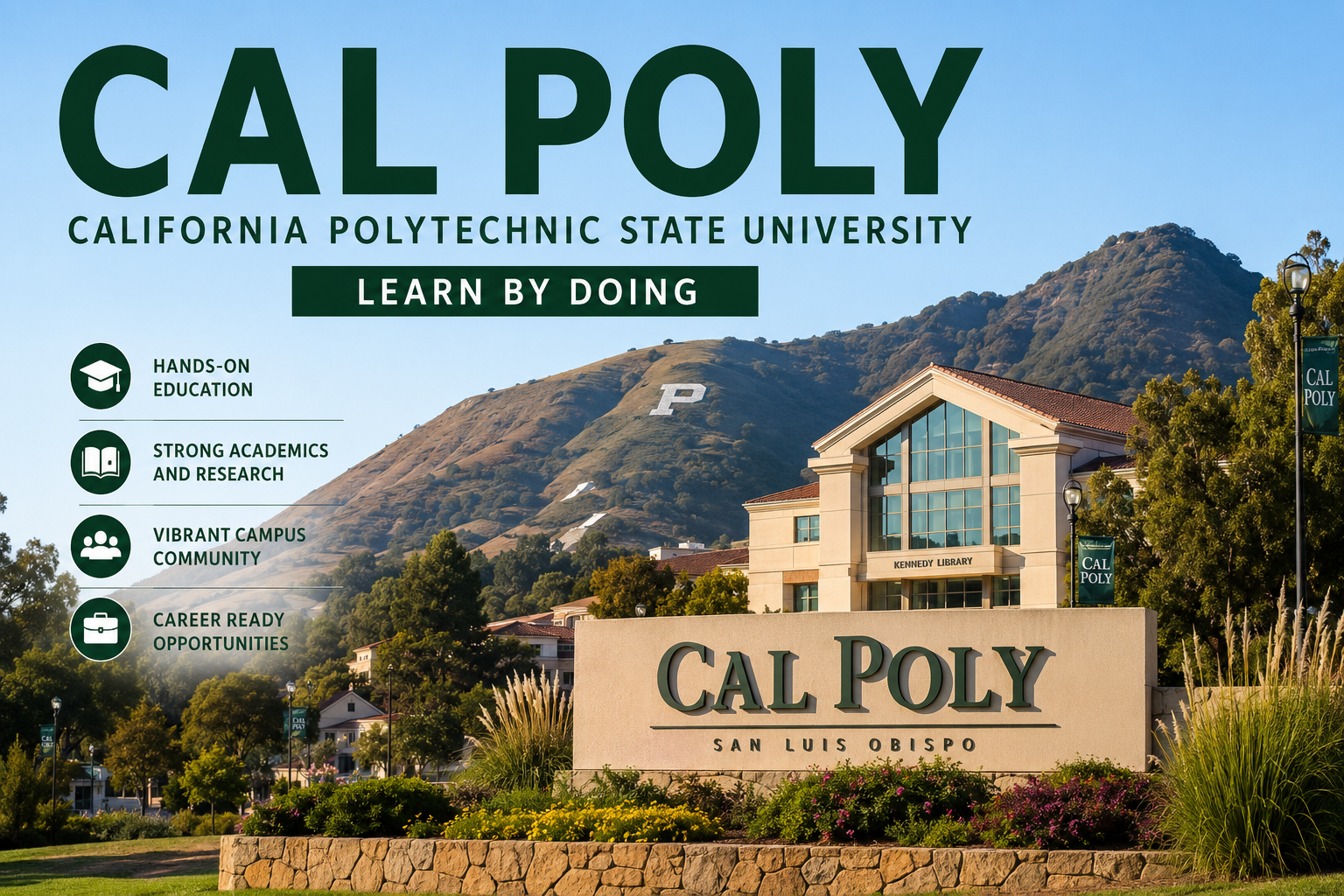
California Polytechnic State University, commonly known as Cal Poly, is a public university located in San Luis Obispo, California. Since its founding in 1901, the university has built a reputation for combining classroom education with practical experience through its well-known “Learn by Doing” philosophy. Rather than focusing solely on lectures and textbooks, Cal Poly encourages students to apply what they learn through laboratories, research projects, internships, and hands-on assignments.
Over the years, the university has become recognized for its strong academic programs, vibrant campus community, and emphasis on career readiness. Students from across the United States and many other countries choose Cal Poly because it offers a balanced educational experience that combines rigorous academics with practical skills valued by employers.
Whether someone is considering applying to the university, researching higher education options, or simply learning about one of California’s public institutions, understanding Cal Poly’s history, educational approach, and campus environment provides valuable insight into why it has become a respected name in higher education.
The History of Cal Poly
Cal Poly was established in 1901 as the California Polytechnic School after legislation signed by California Governor Henry Gage. The institution originally focused on vocational education, preparing students with practical skills in agriculture, mechanics, and home economics. During its earliest years, the campus emphasized technical training designed to meet the needs of California’s rapidly growing economy.
As California continued developing throughout the twentieth century, the university expanded its academic offerings beyond vocational education. New colleges, research facilities, and specialized degree programs were introduced to prepare students for increasingly complex careers in engineering, architecture, business, science, and technology. This gradual expansion transformed Cal Poly into a comprehensive public university while maintaining its practical educational philosophy.
Today, Cal Poly continues to honor its historical roots while embracing modern education. Although technology and industries have evolved significantly since 1901, the university’s commitment to combining theory with real-world application remains one of its defining characteristics.
The “Learn by Doing” Philosophy
One of Cal Poly’s most recognizable features is its educational philosophy known as “Learn by Doing.” Rather than relying entirely on classroom lectures, students are encouraged to actively participate in projects that mirror professional work environments. This approach allows them to develop technical abilities alongside communication, teamwork, and critical-thinking skills.
Hands-on learning appears throughout many academic programs. Engineering students may build working prototypes, architecture students design complete building concepts, agriculture students gain field experience, and business students participate in consulting projects or entrepreneurial competitions. These opportunities help students connect academic concepts with practical applications.
The Learn by Doing philosophy also extends beyond the classroom through internships, undergraduate research, service-learning opportunities, and partnerships with industry organizations. These experiences help students graduate with practical knowledge that complements their academic education.
Academic Colleges and Programs
Cal Poly offers a wide variety of undergraduate and graduate programs through several academic colleges. Students can pursue degrees in engineering, agriculture, architecture, business, liberal arts, science, education, and related fields. This broad selection allows individuals to explore diverse career interests while benefiting from interdisciplinary learning opportunities.
Engineering remains one of the university’s most recognized academic strengths. Programs in mechanical, civil, electrical, computer, aerospace, and industrial engineering consistently attract students interested in solving complex technical challenges. Modern laboratories and project-based coursework provide opportunities to gain valuable practical experience throughout each program.
Beyond engineering, Cal Poly is equally respected for agriculture, architecture, business administration, environmental sciences, and computer science. Faculty members often encourage collaborative projects that allow students from different disciplines to work together, reflecting the teamwork commonly found in professional workplaces.
Research and Innovation
Although Cal Poly places significant emphasis on undergraduate education, research also plays an important role within the university community. Faculty members and students collaborate on projects involving renewable energy, sustainable agriculture, robotics, environmental conservation, artificial intelligence, and many other fields.
Research opportunities allow students to apply classroom concepts while developing analytical, technical, and communication skills. Participating in research can also strengthen graduate school applications and provide valuable experience for future careers.
Innovation is supported through modern laboratories, specialized research centers, and partnerships with businesses and public organizations. These collaborations encourage students to solve real-world problems while contributing meaningful knowledge to their academic disciplines.
Campus Life at Cal Poly
Campus life at Cal Poly offers students a balance between academic responsibilities and personal development. The university provides an environment where students can participate in clubs, organizations, cultural events, recreational activities, and volunteer programs. These opportunities help students build friendships, explore new interests, and develop leadership skills outside the classroom.
Student organizations play an important role in the university experience. With hundreds of clubs covering academic interests, professional development, cultural diversity, sports, community service, and hobbies, students have numerous ways to become involved. Joining organizations allows students to meet classmates who share similar interests while expanding their personal and professional networks.
The campus also hosts a variety of events throughout the academic year, including guest lectures, performances, career fairs, cultural celebrations, and student-led activities. These events contribute to a vibrant campus atmosphere while encouraging lifelong learning beyond traditional coursework.
Housing and Student Services
Cal Poly offers several housing options designed to meet the needs of both new and returning students. Residence halls provide convenient access to classrooms, dining facilities, libraries, and recreational spaces, allowing students to become fully involved in campus life. Living on campus also gives students opportunities to build friendships and participate in community activities.
In addition to housing, the university provides a wide range of student support services. Academic advising helps students select courses and plan their degree progress, while tutoring centers offer assistance for challenging subjects. Career services provide resume reviews, interview preparation, internship guidance, and networking opportunities to support students as they prepare for future careers.
Health and wellness resources are another important part of student life. Counseling services, wellness programs, fitness facilities, and health education initiatives aim to support students’ physical and mental well-being throughout their university experience. These resources encourage students to maintain a healthy balance between academics and personal life.
Admissions Overview
Admission to Cal Poly is competitive, with applicants evaluated based on academic achievement and other criteria established by the university. Prospective students are encouraged to review the latest admissions requirements through official university resources before beginning the application process.
Preparing a strong application typically involves maintaining solid academic performance, completing the recommended college preparatory coursework, and submitting all required materials before established deadlines. Depending on the program, additional requirements or supplemental information may also apply.
International applicants and transfer students should carefully review the specific admission procedures that relate to their educational background. Understanding deadlines, required documents, and eligibility requirements can help applicants navigate the admissions process more effectively.
Athletics and Recreation
Athletics have long been an important part of campus life at Cal Poly. The university participates in intercollegiate sports across a variety of men’s and women’s athletic programs, giving student-athletes opportunities to compete while continuing their education. Sporting events also bring students, alumni, and the local community together throughout the academic year.
Beyond competitive athletics, recreational sports and fitness programs are available for all students. Intramural leagues, club sports, group fitness classes, and outdoor recreation activities encourage participation regardless of athletic experience. These programs promote healthy lifestyles while providing opportunities for teamwork and personal growth.
The campus recreation facilities include fitness centers, sports fields, courts, swimming facilities, and outdoor spaces where students can remain active. Many students find that participating in recreational activities helps reduce stress while improving overall well-being during busy academic schedules.
Career Preparation and Industry Connections
One of Cal Poly’s distinguishing characteristics is its emphasis on preparing students for successful careers. Through internships, cooperative education opportunities, industry-sponsored projects, and networking events, students gain valuable experience before graduation. These practical experiences often help graduates transition more smoothly into professional careers.
Career Services supports students throughout their academic journey by offering resume assistance, interview coaching, career counseling, and employer networking opportunities. Regular career fairs connect students with organizations representing a wide variety of industries, allowing them to explore internships and full-time employment opportunities.
Many academic departments also maintain relationships with businesses, government agencies, and nonprofit organizations. These partnerships provide students with opportunities to work on real-world projects while developing practical skills that employers value. As a result, many graduates leave the university with both academic knowledge and meaningful professional experience.
Campus Traditions and Student Culture
One of the aspects that makes Cal Poly unique is its strong sense of community. Throughout the academic year, students participate in traditions that encourage school spirit, collaboration, and campus involvement. These events help create lasting memories while strengthening connections among students, faculty, staff, and alumni.
Student culture at Cal Poly reflects the university’s practical approach to education. Many students enjoy participating in engineering competitions, agricultural showcases, business case challenges, research symposiums, and design exhibitions. These activities allow students to demonstrate their knowledge while learning from peers and professionals.
Community service also plays an important role in campus life. Many student organizations organize volunteer projects that benefit local schools, environmental programs, nonprofit organizations, and community initiatives. Participating in these activities allows students to develop leadership skills while making meaningful contributions beyond the university.
Notable Alumni and Achievements
Over the years, Cal Poly has produced graduates who have built successful careers across a wide range of industries. Alumni have contributed to engineering, architecture, agriculture, business, education, technology, science, public service, and entrepreneurship. Their accomplishments reflect the university’s long-standing emphasis on combining academic knowledge with practical experience.
Many graduates have founded companies, led major organizations, contributed to scientific research, and worked on projects that have had local, national, and international impact. Others have become educators, government officials, architects, designers, and innovators who continue to influence their respective fields.
The university also celebrates student and faculty achievements through research, innovation, academic competitions, and community partnerships. These accomplishments demonstrate the institution’s ongoing commitment to educational excellence and professional development.
Frequently Asked Questions About Cal Poly
Where is Cal Poly located?
Cal Poly is located in San Luis Obispo, California, approximately halfway between Los Angeles and San Francisco along California’s Central Coast. The location provides students with access to beaches, hiking trails, parks, and a mild climate throughout much of the year.
The surrounding community is known for its welcoming atmosphere, outdoor recreation opportunities, and local businesses. Many students enjoy exploring the area’s natural beauty while pursuing their studies.
Its location also offers convenient access to internships, industry partnerships, and educational opportunities throughout California.
What is Cal Poly best known for?
Cal Poly is widely recognized for its “Learn by Doing” educational philosophy. This approach encourages students to gain practical experience through laboratories, design projects, research, internships, and collaborative learning opportunities.
The university is also known for its strong academic programs in engineering, agriculture, architecture, business, computer science, and environmental sciences. Many employers value graduates because they often possess both theoretical knowledge and practical skills.
This combination of academics and hands-on learning has contributed to the university’s strong reputation among students and employers alike.
Does Cal Poly offer student organizations?
Yes. Cal Poly offers hundreds of student organizations covering academic interests, professional development, cultural diversity, recreation, volunteer service, leadership, and personal hobbies.
Joining clubs provides opportunities to build friendships, gain leadership experience, develop professional networks, and explore interests outside the classroom. Many organizations also host workshops, competitions, conferences, and community service activities.
These experiences complement classroom education while helping students become active members of the university community.
Final Thoughts
Cal Poly has built its reputation through more than a century of practical education, academic excellence, and student engagement. Its commitment to combining classroom instruction with hands-on experience continues to prepare students for careers across numerous industries while encouraging innovation, collaboration, and lifelong learning.
From its historic beginnings as a vocational school to its current role as a comprehensive public university, Cal Poly has continued to evolve while maintaining its core educational philosophy. Modern facilities, diverse academic programs, active student life, and strong industry partnerships provide students with opportunities to develop both personally and professionally.
Whether someone is considering applying, researching universities, or simply learning about California’s higher education system, Cal Poly remains an institution known for its emphasis on practical learning, academic achievement, and community involvement. Its “Learn by Doing” approach continues to shape generations of students who are prepared to contribute meaningfully to their professions and communities.