


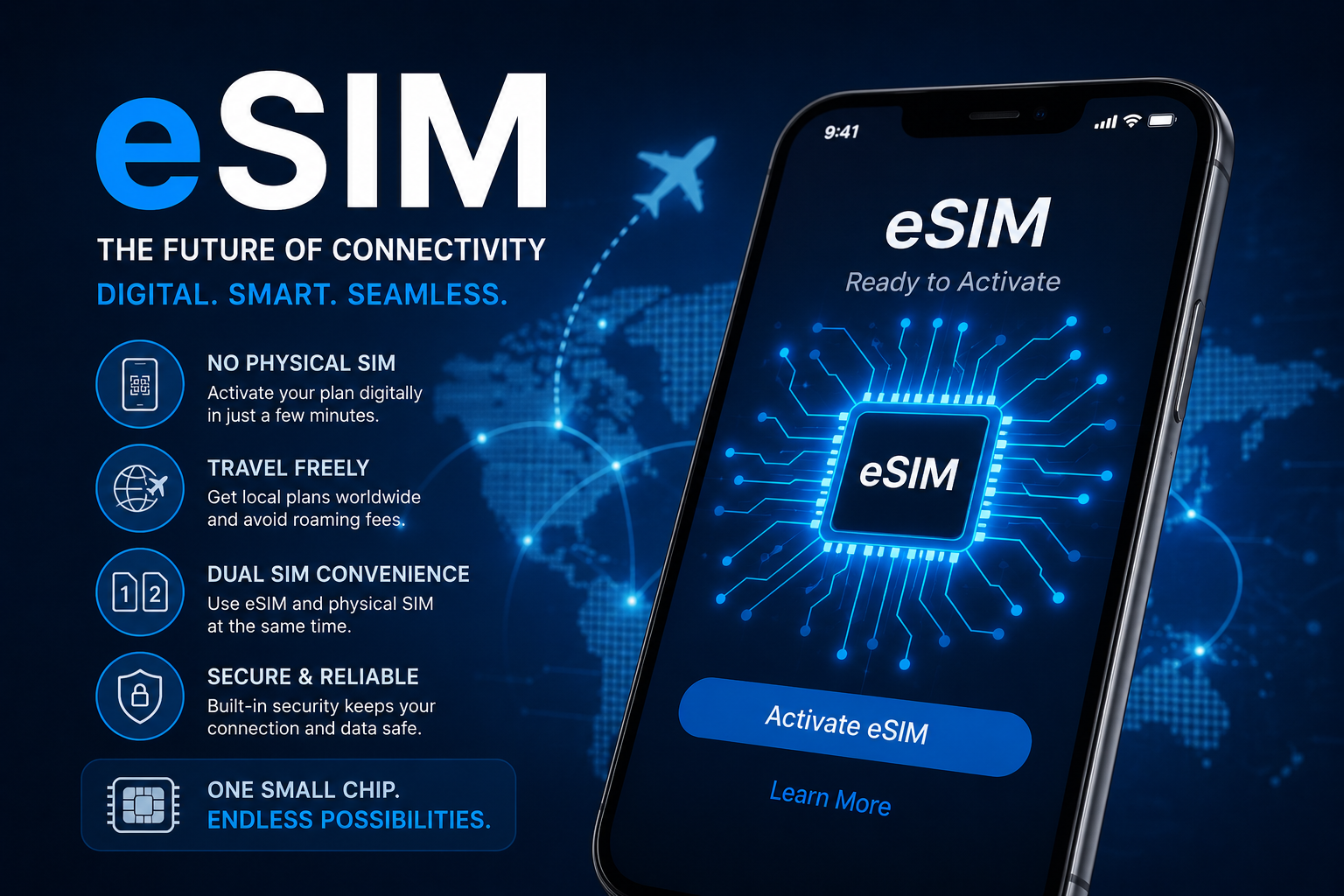
Smartphone technology has evolved rapidly over the last decade, and one of the biggest innovations is the esim. Unlike a traditional SIM card that needs to be physically inserted into your phone, an esim is built directly into your device. It allows users to activate a mobile plan digitally without swapping tiny plastic cards, making the process faster and far more convenient.
As more smartphone manufacturers embrace digital connectivity, the popularity of esim technology continues to grow. From flagship phones to smartwatches and tablets, many modern devices now support this feature. Whether you’re a frequent traveler, business professional, or everyday smartphone user, understanding how the embedded sim works can help you make smarter decisions when choosing your next mobile device.
In this guide, you’ll learn everything you need to know about the embedded sim, including how it works, its advantages and disadvantages, compatible devices, activation methods, security features, and whether it’s worth using in 2026.
What Is eSIM?
An esim, short for Embedded Subscriber Identity Module, is a programmable chip built directly into a compatible smartphone, tablet, smartwatch, or laptop. Instead of inserting a removable SIM card, users download a mobile carrier profile onto the embedded chip through software.
The biggest advantage of the embedded sim technology is convenience. Since there is no physical SIM card to handle, activating a new mobile plan can often be completed in just a few minutes. Most carriers simply provide a QR code or activation details that automatically configure the device.
Another important benefit is durability. Because there is no SIM tray to remove or replace, manufacturers can improve water resistance while simplifying the internal design of modern smartphones.
How Does eSIM Work?
The esim functions similarly to a traditional SIM card by securely storing the information required for your mobile carrier to identify your device on its network. The difference is that this information is downloaded digitally rather than stored on a removable plastic card.
When purchasing a new mobile plan, your carrier provides an activation QR code or allows direct activation through its mobile application. Once scanned, your phone downloads the carrier profile and immediately connects to the network.
Many modern smartphones support multiple the embedded sim profiles. This means users can store several carrier plans on one device and easily switch between them without physically changing SIM cards.
Advantages of Using eSIM
One of the greatest benefits of esim technology is flexibility. Users can activate new plans from home without waiting for a SIM card to arrive in the mail or visiting a retail store.
Travelers benefit significantly from the embedded sim support. Instead of purchasing local SIM cards in each country, users can download international data plans before arriving at their destination. This reduces roaming costs while providing instant connectivity.
Another advantage is improved device design. Removing the physical SIM tray allows manufacturers to save internal space for larger batteries, additional components, or stronger water resistance, resulting in more reliable smartphones.
Potential Disadvantages of eSIM
Although esim technology offers numerous advantages, it also has some limitations. Not every mobile carrier currently supports digital SIM activation, especially in smaller regions where physical SIM cards remain the standard.
Switching devices may also require additional activation steps. Instead of moving a physical SIM card between phones, users often need to transfer or reactivate their esim profile through their carrier.
Compatibility is another consideration. Older smartphones typically lack esim support, meaning users may need to upgrade their devices before taking advantage of this technology.
Devices That Support eSIM
Many flagship smartphones now include esim functionality. Premium devices from Apple, Samsung, Google, Motorola, and several other manufacturers support digital SIM activation.
Beyond smartphones, the embedded sim technology has expanded into smartwatches, tablets, laptops, and connected devices. This allows users to maintain cellular connectivity even when their smartphone is not nearby.
Support continues to increase each year as manufacturers recognize the convenience and flexibility that the embedded sim provides for both consumers and mobile carriers.
eSIM vs Physical SIM
Comparing esim with a traditional SIM card highlights several important differences. Physical SIM cards must be inserted into a dedicated tray, while an embedded sim is permanently embedded inside the device.
Security also improves with esim technology. Since there is no removable card, thieves cannot simply remove the SIM to disable network access or make tracking more difficult after stealing a phone.
However, physical SIM cards still offer one advantage: they are easier to move between compatible devices. With esim, transferring your mobile profile may require additional authentication through your carrier.
Is eSIM Safe?
Security is one of the strongest aspects of esim technology. Carrier profiles are encrypted during activation, making unauthorized access significantly more difficult than many people assume.
Because the esim is embedded directly into the hardware, it cannot be physically removed or cloned as easily as traditional SIM cards. This provides additional protection against certain types of fraud.
Major smartphone manufacturers also combine esim technology with advanced security features such as secure hardware modules and encrypted storage, further protecting user information.
Who Should Use eSIM?
Frequent travelers are among the biggest beneficiaries of esim technology. Downloading international data plans before arriving in another country eliminates the need to search for local SIM cards at airports or retail stores.
Business professionals who manage multiple phone numbers can also benefit from the embedded sim. Many smartphones support both a physical SIM and an embedded sim, allowing users to separate personal and work numbers on a single device.
Everyday smartphone users can enjoy easier activation, fewer physical components to manage, and greater convenience when switching mobile carriers.
The Future of eSIM Technology
Industry experts expect esim adoption to continue growing as more manufacturers eliminate physical SIM trays altogether. Several modern smartphones already rely entirely on digital SIM technology in certain markets.
As more mobile carriers expand support, activating a new phone will become even faster and more convenient. Future devices may allow nearly instant carrier switching directly from the phone’s settings menu.
The expansion of connected devices, including wearables, tablets, and Internet of Things products, will also increase the importance of the embedded sim technology over the coming years.
Final Thoughts
The esim represents one of the most important advancements in mobile connectivity. By replacing traditional plastic SIM cards with secure digital profiles, it simplifies activation, improves convenience, enhances security, and supports modern device designs.
Whether you’re purchasing your first embedded sim-compatible smartphone or simply exploring the technology, it’s clear that digital SIMs are becoming the new industry standard. As carrier support expands and more devices adopt embedded SIM technology, users can expect even greater flexibility and convenience.
If you’re upgrading your smartphone in 2026, choosing a device with the embedded sim support is a smart long-term investment. It offers easier carrier management, simplified international travel, enhanced security, and a more streamlined mobile experience that is well prepared for the future of wireless communication.