


Introduction
The phrase main character syndrome has become one of the most talked-about internet expressions in recent years. It gained popularity through social media platforms where people jokingly describe someone who behaves as though they are the central character in every situation. While the term is often used humorously, it has also sparked meaningful conversations about self-awareness, confidence, and the way people present themselves online.
Many individuals experience moments when they imagine themselves as the star of their own story. To some extent, this mindset can be healthy because it encourages people to prioritize personal goals, build confidence, and appreciate life’s memorable moments. However, when taken to the extreme, main character syndrome can lead to self-centered behavior and difficulty recognizing the feelings or perspectives of others.
In this article, we’ll explore what main character syndrome means, why the term became so popular, its potential effects on relationships and mental well-being, and how to maintain a healthy balance between self-confidence and empathy.
What Is Main Character Syndrome?
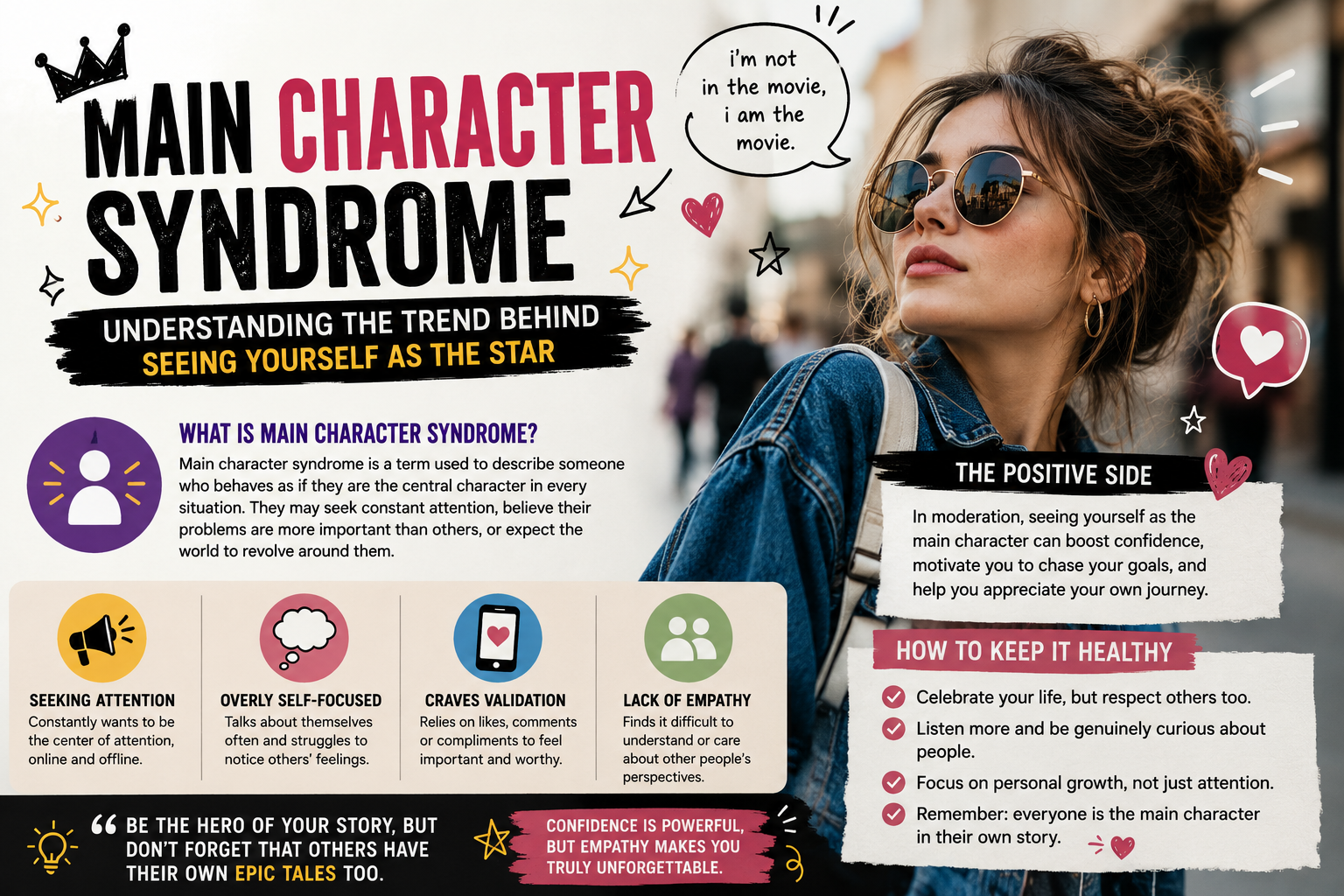
Main character syndrome is an informal internet term used to describe someone who behaves as though they are the main character in a story while everyone else plays a supporting role. It is not a recognized medical or psychological diagnosis but rather a cultural expression used in conversations, memes, and social media discussions.
People described as having main character syndrome may constantly seek attention, interpret ordinary events as highly significant, or believe that their experiences deserve greater importance than those of the people around them. In many cases, the phrase is used playfully rather than as a serious criticism.
It’s important to remember that everyone naturally views life from their own perspective. The difference lies in whether a person also values the experiences, emotions, and needs of others. Healthy self-confidence is very different from believing that only your story matters.
Why Did Main Character Syndrome Become So Popular?
The rise of TikTok, Instagram, YouTube, and other social media platforms played a major role in popularizing main character syndrome. Content creators began producing videos that encouraged viewers to romanticize everyday life, celebrate personal achievements, and enjoy simple moments as though they were scenes from a movie.
This trend resonated with millions of people because it encouraged positivity and mindfulness. Seeing yourself as the protagonist of your own life can motivate you to pursue goals, try new experiences, and appreciate personal growth. For many users, the trend became a fun way to express creativity and confidence.
At the same time, critics pointed out that constantly seeking attention or validation online could encourage unhealthy behaviors. As a result, main character syndrome evolved into both a humorous meme and a broader discussion about social media culture, self-image, and personal responsibility.
Common Signs of Main Character Syndrome
One common sign associated with main character syndrome is the tendency to dominate conversations by consistently redirecting discussions toward personal experiences. While sharing stories is perfectly normal, problems arise when someone rarely shows interest in what others have to say.
Another characteristic is frequently seeking validation through social media or public recognition. Some individuals may become overly focused on likes, comments, compliments, or attention, allowing outside approval to heavily influence their self-esteem.
People displaying main character syndrome may also unintentionally overlook how their actions affect others. They might assume their priorities should always come first or expect friends and family to constantly adapt to their preferences. Developing empathy and active listening skills helps prevent these behaviors from becoming problematic.
Is Main Character Syndrome a Real Mental Health Condition?
One of the most common questions people ask is whether main character syndrome is an actual psychological diagnosis. The answer is no. The term is not recognized as a mental health disorder in professional diagnostic manuals. Instead, it is an informal phrase used online to describe certain behaviors or attitudes.
Although the expression isn’t a clinical diagnosis, some behaviors associated with main character syndrome can overlap with broader discussions about self-esteem, personality traits, confidence, or the influence of social media. However, it’s important not to label or diagnose someone based solely on internet terminology.
Mental health professionals evaluate individuals using established clinical criteria rather than viral phrases. If someone’s behavior is causing serious distress or affecting their relationships, seeking guidance from a qualified mental health professional is far more helpful than relying on social media labels.
The Positive Side of Main Character Syndrome
Despite its negative reputation, main character syndrome isn’t always harmful. In moderation, adopting a “main character” mindset can encourage people to take control of their lives, pursue meaningful goals, and appreciate everyday experiences.
Many people use the concept as motivation for personal growth. Viewing yourself as the hero of your own story can inspire healthier habits, greater confidence, and a stronger sense of purpose. It encourages individuals to stop waiting for perfect circumstances and begin creating memorable experiences.
The key difference lies in balance. Healthy confidence allows someone to value their own journey while still respecting the needs, opinions, and experiences of everyone around them.
Potential Downsides of Main Character Syndrome
When taken too far, main character syndrome can create problems in friendships, family relationships, and workplaces. Constantly seeking attention or expecting others to revolve around your plans may lead to misunderstandings and conflict.
Social media can sometimes reinforce these behaviors by rewarding dramatic content and personal storytelling. If someone begins measuring their self-worth entirely through online attention, they may struggle with disappointment whenever expectations are not met.
Another potential issue is reduced empathy. Focusing exclusively on your own experiences can make it harder to recognize the perspectives, emotions, and challenges faced by other people. Healthy relationships depend on mutual understanding, communication, and respect.
How to Maintain a Healthy Perspective
If you enjoy the motivational aspects of main character syndrome, try focusing on personal growth instead of external validation. Set meaningful goals, celebrate your achievements, and appreciate life’s small moments without feeling the need to share every experience online.
Practice active listening during conversations. Asking thoughtful questions and showing genuine interest in other people’s experiences strengthens relationships and helps maintain emotional balance.
Finally, remember that everyone is the main character of their own life. Recognizing that each person has unique goals, struggles, and dreams encourages empathy while allowing you to continue building your own story with confidence and self-awareness.
Frequently Asked Questions About Main Character Syndrome
One of the most common questions is whether main character syndrome is a real medical diagnosis. The answer is no. It is an informal internet term rather than a recognized psychological condition. The phrase is commonly used to describe behaviors where someone appears to see themselves as the central focus of every situation.
Another frequently asked question is whether having main character syndrome is always a bad thing. Not necessarily. Seeing yourself as the main character of your own life can encourage confidence, motivation, and personal growth. However, it becomes unhealthy if it causes someone to ignore the feelings, needs, or perspectives of others.
People also ask how they can avoid developing main character syndrome. The best approach is to maintain a balance between self-confidence and empathy. Celebrating your achievements while respecting other people’s experiences creates healthier relationships and a more realistic perspective on life.
Lessons We Can Learn from Main Character Syndrome
The popularity of main character syndrome reflects how social media has influenced the way people think about identity, confidence, and personal storytelling. While the trend encourages individuals to appreciate their own lives, it also serves as a reminder that everyone has a unique journey worth respecting.
Another valuable lesson is the importance of self-awareness. Taking time to reflect on your actions, listening to constructive feedback, and considering how your behavior affects others can help you grow as a person. Confidence becomes far more meaningful when it is balanced with humility and compassion.
Finally, main character syndrome reminds us that life’s most rewarding experiences often come from meaningful relationships rather than constant attention. Supporting friends, celebrating other people’s successes, and showing kindness contribute to a more fulfilling and balanced life.
Conclusion
Main character syndrome has evolved from a viral social media phrase into a broader conversation about confidence, identity, and modern culture. While the term is often used humorously, it highlights the importance of balancing self-expression with empathy and respect for others.
Viewing yourself as the hero of your own story can be motivating when it encourages personal growth, resilience, and positive change. At the same time, recognizing that everyone else is the main character of their own life helps build stronger relationships and healthier communities.
Whether you’ve encountered the phrase online or simply wanted to understand its meaning, main character syndrome offers an interesting perspective on how people navigate confidence, social media, and everyday interactions in today’s digital world.