


Introduction
If you’re looking for a beautiful houseplant that’s easy to grow and hard to kill, pothos should be at the top of your list. Known for its heart-shaped leaves and trailing vines, pothos is one of the most popular indoor plants among beginners and experienced plant enthusiasts alike. Its ability to thrive in different lighting conditions and tolerate occasional neglect makes it an excellent choice for homes, apartments, and offices.
One of the reasons pothos has remained a favorite for decades is its versatility. Whether you place it on a bookshelf, hang it in a basket, or let it climb a moss pole, this attractive plant adds greenery and life to almost any indoor space. Its vibrant foliage can instantly brighten a room while creating a calm and refreshing atmosphere.
In this guide, you’ll learn everything you need to know about pothos, from its origins and popular varieties to watering, lighting, propagation, and common care mistakes. By the end of this article, you’ll have the knowledge needed to keep your plants healthy and thriving throughout the year.
What Is a Pothos Plant?
Pothos is a tropical evergreen vine that belongs to the Araceae family. Native to the Solomon Islands in the South Pacific, it naturally grows by climbing trees and spreading across forest floors. Its scientific name is Epipremnum aureum, although many people simply refer to it as pothos because of its widespread popularity.
The plant is instantly recognizable thanks to its glossy, heart-shaped leaves. Depending on the variety, the foliage may display shades of green, yellow, white, or even creamy variegation. As the vines mature, they can grow several feet long indoors, making pothos an excellent option for hanging planters and decorative shelves.
One of the biggest reasons gardeners recommend pothos is its forgiving nature. Unlike many tropical plants that require constant attention, pothos adapts well to changing conditions. Even if you occasionally forget to water it or place it in less-than-perfect lighting, it often continues growing without significant problems.
Why Pothos Is One of the Best Houseplants
There are countless indoor plants available today, but pothos consistently ranks among the easiest to maintain. It tolerates a wide range of indoor temperatures, grows quickly, and rarely demands complicated care routines. These qualities make it perfect for busy homeowners and first-time plant owners.
Another major advantage of pothos is its decorative appeal. The trailing vines create a lush, cascading effect that works beautifully in modern, minimalist, rustic, and traditional interior designs. Whether displayed on floating shelves or hanging near a sunny window, plants effortlessly enhances any room.
Many people also appreciate how adaptable the plant is. It grows well in containers of different sizes, responds positively to regular pruning, and can even be trained to climb trellises or moss poles. This flexibility allows you to style the plant according to your personal preferences while keeping it healthy and attractive.
Popular Types of Pothos
One of the most exciting aspects of growing pothos is choosing from the many beautiful varieties available. Although they share similar care requirements, each variety has unique leaf colors and patterns that give it a distinct personality.
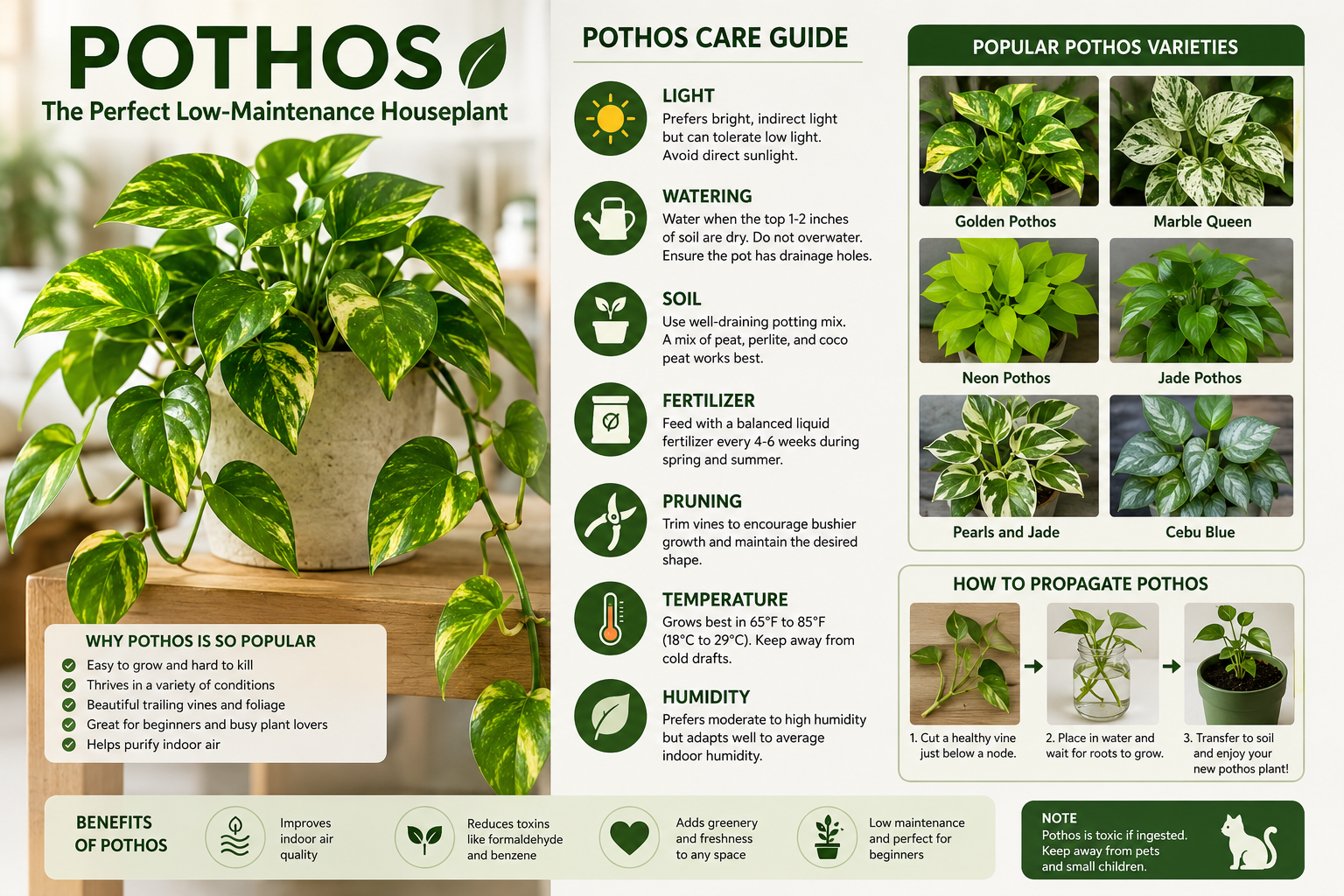
Golden pothos is perhaps the most common variety. Its rich green leaves are decorated with golden-yellow streaks, making it instantly recognizable. Because it’s highly adaptable and fast-growing, it’s often recommended for beginners who are purchasing their first indoor plant.
Marble Queen pothos features striking white and green variegated leaves that create a sophisticated appearance. Neon plants, on the other hand, stands out with its bright lime-green foliage that instantly adds energy to indoor spaces. Other popular varieties include Jade pothos, Pearls and Jade pothos, Cebu Blue, and Manjula pothos, each offering unique colors and textures for plant collectors.
How to Care for a Pothos Plant
One of the biggest reasons pothos remains one of the world’s favorite houseplants is because its care routine is incredibly simple. While it appreciates good growing conditions, it can also tolerate occasional mistakes that would damage more delicate plants. With a few basic habits, your pothos can stay healthy and continue producing beautiful vines for many years.
Consistency is more important than perfection. Instead of constantly changing watering schedules or moving the plant from one location to another, try to provide stable conditions. Pothos responds well to regular care and usually rewards owners with steady, noticeable growth throughout the growing season.
Although the plant is forgiving, understanding its basic needs allows it to reach its full potential. Proper lighting, watering, soil, and occasional feeding all contribute to stronger vines, healthier leaves, and faster growth.
Choosing the Right Light for Pothos
Light plays an important role in keeping pothos healthy. The ideal location is bright, indirect sunlight, where the leaves receive plenty of natural light without being exposed to harsh afternoon sun. East-facing windows or a few feet away from south-facing windows usually provide excellent conditions.
One of the reasons pothos is so popular is its ability to survive in lower-light environments. Offices, bedrooms, and hallways with limited sunlight can still support healthy growth, although the plant may grow more slowly. Variegated varieties often need slightly more light to maintain their colorful patterns, while solid green varieties adapt more easily to shade.
Direct sunlight should generally be avoided because intense rays can scorch the leaves, causing brown patches and faded colors. If you notice your plant developing pale or crispy leaves, moving it to an area with filtered light usually solves the problem.
Watering and Soil Requirements
Proper watering is one of the easiest ways to keep pothos thriving. Instead of watering on a strict schedule, check the soil first. Allow the top one to two inches of soil to dry before watering again. This simple habit helps prevent overwatering, which is one of the most common causes of plant problems.
When watering pothos, soak the soil thoroughly until excess water drains from the bottom of the pot. Empty any standing water from the saucer afterward so the roots don’t remain submerged. Healthy drainage keeps the root system strong and reduces the risk of root rot.
Choosing the right potting mix is equally important. A well-draining indoor plant soil containing peat moss, coco coir, perlite, or bark provides excellent airflow around the roots. Heavy garden soil should be avoided because it retains too much moisture for indoor pothos plants.
Fertilizing and Encouraging Faster Growth
Although pothos can survive without regular fertilizer, occasional feeding encourages fuller foliage and faster vine growth. During spring and summer, applying a balanced liquid houseplant fertilizer once every four to six weeks usually provides all the nutrients the plant needs.
Avoid over-fertilizing because excessive nutrients can damage the roots and lead to salt buildup in the soil. Using fertilizer at half the recommended strength is often enough for healthy indoor pothos. During autumn and winter, growth naturally slows, so feeding can usually be reduced or stopped until spring returns.
Pruning also encourages bushier growth. Trimming long vines just above a leaf node stimulates new branches, making your plant appear fuller instead of producing a few long, sparse stems. Regular pruning also helps maintain the desired shape and size of the plant.
How to Propagate Pothos Successfully
One of the most rewarding features of pothos is how easy it is to propagate. Even beginners can successfully grow new plants from simple stem cuttings, making it an affordable way to expand an indoor plant collection.
To propagate pothos, select a healthy vine and cut just below a leaf node using clean scissors. Remove the lowest leaf and place the cutting in water, ensuring the node remains submerged. Within a few weeks, small white roots usually begin to develop.
Once the roots reach two to three inches in length, the cutting can be transferred into potting soil. Keep the soil lightly moist during the first few weeks while the new plant establishes itself. With proper care, the propagated cutting will soon begin producing fresh leaves and longer vines.
Common Problems and How to Fix Them
Even though pothos is considered one of the easiest houseplants to grow, it can still experience occasional problems. Fortunately, most issues are easy to identify and fix before they become serious. Paying attention to your plant’s leaves is often the quickest way to recognize that something needs adjustment.
Yellow leaves are one of the most common concerns among pothos owners. In many cases, this is caused by overwatering or poor drainage. Allowing the soil to dry slightly between waterings and ensuring the pot has drainage holes usually solves the issue. If only one or two older leaves turn yellow occasionally, there’s usually no reason to worry.
Brown leaf edges or crispy tips often indicate underwatering, very dry indoor air, or excessive direct sunlight. Moving your plants to a location with bright, indirect light and maintaining a consistent watering routine can quickly restore healthy growth. Regularly wiping dust from the leaves also helps the plant absorb more sunlight efficiently.
Common Pests That Affect Pothos
Although pothos is relatively resistant to pests, it isn’t completely immune. Common indoor pests include spider mites, mealybugs, fungus gnats, and scale insects. These pests typically appear when plants become stressed or growing conditions are less than ideal.
Inspect your pothos regularly, especially the undersides of the leaves and around new growth. Early detection makes pest control much easier. If you notice sticky residue, tiny webs, white cotton-like spots, or small insects, isolate the plant from others to prevent the infestation from spreading.
Most pest problems can be treated using insecticidal soap, neem oil, or by gently wiping the leaves with a damp cloth. Maintaining good airflow, avoiding excessive moisture, and cleaning the foliage periodically greatly reduce the chances of future infestations.
Creative Ways to Display Pothos Indoors
One of the best things about pothos is its versatility in home décor. Because of its long, trailing vines, it can be displayed in countless creative ways that complement almost any interior design style. Whether your home is modern, rustic, or minimalist, pothos blends in beautifully.
Hanging baskets remain one of the most popular options. As the vines grow longer, they create an elegant cascading effect that adds texture and color to empty corners or near bright windows. Floating shelves also make excellent display areas, allowing the vines to trail naturally downward.
If you prefer a vertical look, train your plants to climb a moss pole, trellis, or decorative support. Climbing encourages larger leaves and creates a lush, tropical appearance that instantly becomes a focal point in any room.
Is Pothos the Right Plant for You?
If you’re searching for a beautiful, affordable, and low-maintenance houseplant, pothos is an outstanding choice. It requires minimal care, adapts well to different indoor environments, and rewards owners with continuous growth throughout the year. Even those with little gardening experience can enjoy success with this resilient plant.
Beyond its attractive appearance, pothos offers incredible versatility. It can grow in small apartments, large homes, offices, dorm rooms, and even bathrooms with sufficient indirect light. Its ability to adapt makes it one of the most beginner-friendly houseplants available today.
It’s important to remember that pothos is toxic if ingested by pets or small children. Keeping the plant out of reach ensures everyone can safely enjoy its beauty while avoiding accidental consumption.
Conclusion
Pothos has earned its reputation as one of the world’s favorite indoor plants for good reason. Its attractive foliage, rapid growth, and forgiving nature make it suitable for beginners while still being appreciated by experienced plant enthusiasts. Whether you’re decorating a new home or expanding an existing plant collection, the plant is a timeless addition that delivers beauty with very little effort.
By providing bright, indirect light, well-draining soil, proper watering, and occasional pruning, your pothos can remain healthy for many years. Regular observation and simple maintenance are usually all that’s needed to keep the vines lush, vibrant, and continuously growing.
With so many stunning varieties to choose from and countless ways to display it, pothos continues to be one of the best houseplants for modern living. If you’re ready to bring more greenery into your home, few plants offer the same combination of elegance, durability, and ease of care as pothos.