


Introduction
A vaulted ceiling is one of the most sought-after architectural features in modern and traditional homes alike. Known for its dramatic height and spacious appearance, a vaulted ceiling can instantly make any room feel brighter, larger, and more luxurious. Whether you’re building a new home, renovating an older property, or simply exploring design ideas, understanding the benefits and considerations of vaulted ceilings can help you make an informed decision.
Unlike standard flat ceilings, vaulted ceilings slope upward toward the roof, creating an open and airy atmosphere. This unique design has been used in architecture for centuries, originally appearing in cathedrals and grand public buildings before becoming a popular feature in residential homes. Today, homeowners appreciate vaulted ceilings not only for their visual appeal but also for their ability to increase natural light and improve the overall ambiance of a space.
In this guide, you’ll learn everything you need to know about vaulted ceilings, including their advantages, disadvantages, popular design styles, construction costs, maintenance tips, and whether they’re the right choice for your home.
What Is a Vaulted Ceiling?
A vaulted ceiling is a ceiling that extends upward from the walls toward the roof, creating a higher-than-normal interior space. Unlike conventional flat ceilings that maintain a consistent height throughout a room, vaulted ceilings feature angled or curved slopes that give the room a much more open appearance.
The concept of the ceilings dates back hundreds of years. Early architects used vaulted structures in churches, castles, and historic buildings because they provided both structural strength and impressive aesthetics. As construction methods improved, vaulted ceilings gradually became more common in residential architecture.
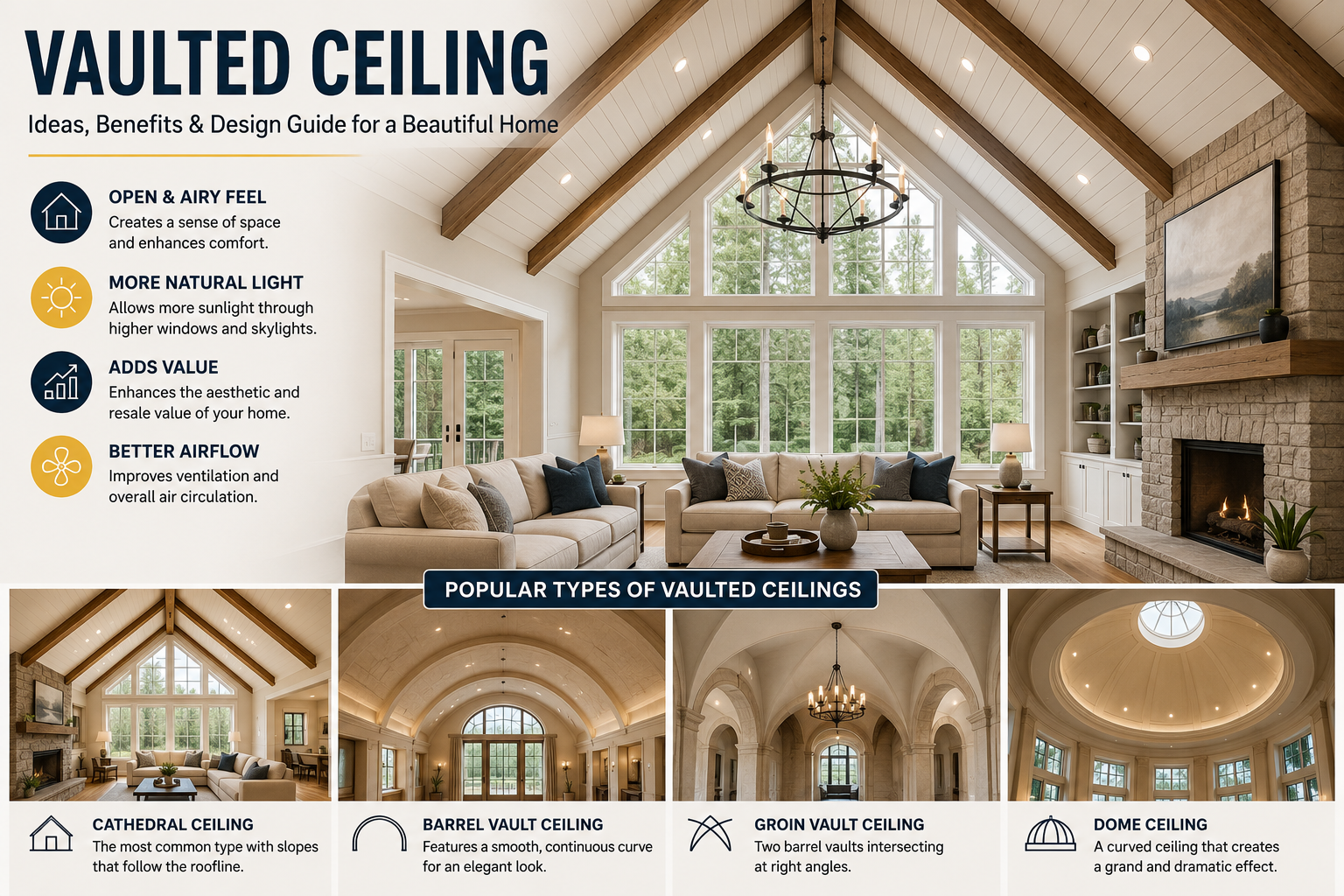
Today, The ceilings come in several styles, including cathedral ceilings, barrel vaults, groin vaults, and dome ceilings. Each design offers its own unique character while sharing the common goal of making interiors feel more spacious and elegant.
Why Homeowners Love Vaulted Ceilings
One of the biggest reasons homeowners choose vaulted ceilings is the sense of openness they create. Even a moderately sized room can appear significantly larger because the eye is naturally drawn upward toward the elevated ceiling. This visual effect makes living rooms, dining rooms, and master bedrooms feel far more inviting.
Another major advantage is the increase in natural light. Larger walls often allow for taller windows, skylights, or clerestory windows that let sunlight flood the room throughout the day. This not only improves the atmosphere but can also reduce the need for artificial lighting during daylight hours.
Vaulted ceilings also add architectural value to a home. They create a premium appearance that many buyers find attractive, which may contribute to better resale value. While they aren’t the only factor influencing home prices, they certainly make properties stand out in competitive housing markets.
Different Types of Vaulted Ceilings
Not all vaulted ceilings look the same. Each style offers a distinct architectural appearance that complements different home designs.
The cathedral ceiling is perhaps the most recognizable. It features two equal sloping sides that meet at the highest point, closely following the roofline. This style is especially popular in cabins, cottages, and modern farmhouses because it creates a dramatic and welcoming atmosphere.
Barrel vaulted ceilings use a smooth, continuous curve instead of straight slopes. This elegant design resembles the inside of a tunnel and adds softness to large spaces. Barrel vaults are commonly found in luxury homes and high-end architectural projects.
Groin vaults combine two barrel vaults that intersect, creating beautiful crossing arches. Dome ceilings, meanwhile, form a rounded shape that serves as a striking centerpiece in entryways, dining rooms, or formal living areas. Each option provides a unique balance between beauty and structural design.
The Benefits of Installing a Vaulted Ceiling
Vaulted ceilings offer more than just impressive aesthetics. They can completely change how a room feels and functions.
Higher ceilings improve airflow because warm air naturally rises. When combined with ceiling fans or properly designed ventilation systems, vaulted spaces can maintain comfortable temperatures throughout the year. This creates a pleasant indoor environment, especially in larger homes.
The added vertical space also provides greater flexibility for interior decorating. Homeowners can install oversized chandeliers, dramatic pendant lighting, exposed wooden beams, or floor-to-ceiling fireplaces that would look overwhelming in rooms with standard ceiling heights.
Finally, The ceilings often created a stronger emotional impact. Guests immediately notice the spaciousness and elegance of a room with a vaulted ceiling, making the home feel more luxurious and memorable without requiring expensive decorative elements.
Potential Drawbacks to Consider
Although vaulted ceilings have many advantages, they also come with a few challenges that homeowners should understand before making a decision.
Construction costs are typically higher because building a vaulted ceiling requires additional framing, engineering, insulation, and finishing materials. If you’re converting an existing flat ceiling, labor expenses can increase significantly depending on the home’s structure.
Heating and cooling may also require additional planning. Since warm air rises, rooms with very high ceilings can become less energy-efficient without proper insulation, ceiling fans, or advanced HVAC systems. Fortunately, modern insulation materials help reduce many of these concerns.
Maintenance can also be slightly more difficult. Cleaning high windows, changing light bulbs, painting walls, or repairing ceiling fixtures often requires ladders or professional assistance. While these tasks aren’t frequent, they should be considered before installation.
Best Rooms for a Vaulted Ceiling
Vaulted ceilings work particularly well in spaces where openness enhances comfort and visual appeal.
Living rooms are the most popular choice because they serve as gathering spaces for family and guests. A vaulted ceiling makes the room feel larger while creating an impressive focal point for furniture, fireplaces, and entertainment areas.
Bedrooms also benefit from vaulted ceilings. The extra height creates a peaceful and relaxing atmosphere that many homeowners associate with luxury hotels. Adding exposed beams or subtle lighting can further enhance the cozy yet spacious feeling.
Kitchens and dining rooms have also embraced vaulted ceilings in recent years. Open-concept homes often combine these areas with living spaces, allowing the entire main floor to feel connected, bright, and welcoming.
Decorating a Room with a Vaulted Ceiling
Decorating a room with a vaulted ceiling requires careful attention to scale and proportion. Because the ceiling is much higher than average, selecting appropriately sized furniture and décor helps maintain visual balance.
Large pendant lights, statement chandeliers, and ceiling fans often become design features themselves. Choosing fixtures that complement the room’s architecture helps fill vertical space while adding character.
Exposed wooden beams remain one of the most popular decorative elements for vaulted ceilings. They introduce warmth, texture, and rustic charm while highlighting the ceiling’s impressive height. Paint colors also play an important role, with light shades helping maximize brightness and darker tones creating a cozy atmosphere in larger rooms.
How Much Does a Vaulted Ceiling Cost?
The cost of installing a vaulted ceiling varies depending on whether it’s included in new construction or added during a renovation. Building one into a new home is generally more affordable because the roof structure is designed accordingly from the beginning.
Converting an existing flat ceiling is more expensive because contractors may need to modify roof framing, relocate electrical wiring, HVAC ducts, plumbing, or structural supports. These additional requirements can substantially increase labor costs.
Material choices also influence the final price. Premium wood beams, custom lighting, skylights, and luxury finishes naturally raise the overall investment. Working with experienced architects and contractors ensures the project remains safe, attractive, and within budget.
Is a Vaulted Ceiling Right for Your Home?
Choosing a vaulted ceiling ultimately depends on your home’s structure, budget, and personal style. If you value open spaces, abundant natural light, and timeless architectural beauty, a vaulted ceiling can be an excellent investment.
However, it’s equally important to consider long-term maintenance, energy efficiency, and construction costs. Consulting with qualified architects or builders before beginning any major renovation ensures your home’s structure can safely accommodate the design.
For many homeowners, the benefits far outweigh the challenges. A well-designed vaulted ceiling creates an inviting atmosphere that enhances everyday living while adding lasting visual appeal and potential resale value.
Conclusion
A vaulted ceiling is much more than a design trend—it’s an architectural feature that transforms ordinary rooms into extraordinary living spaces. Its impressive height, ability to maximize natural light, and timeless elegance make it one of the most desirable features in modern home design.
Whether you prefer the rustic charm of exposed wooden beams, the sophistication of a barrel vault, or the classic beauty of a cathedral ceiling, there are countless ways to incorporate this feature into your home. Careful planning, quality construction, and thoughtful decorating will ensure you enjoy its benefits for many years.
If you’re planning a new build or considering a major renovation, a vaulted ceiling is certainly worth exploring. With the right design and professional guidance, it can elevate both the appearance and value of your home while creating a spacious environment you’ll love every day.