


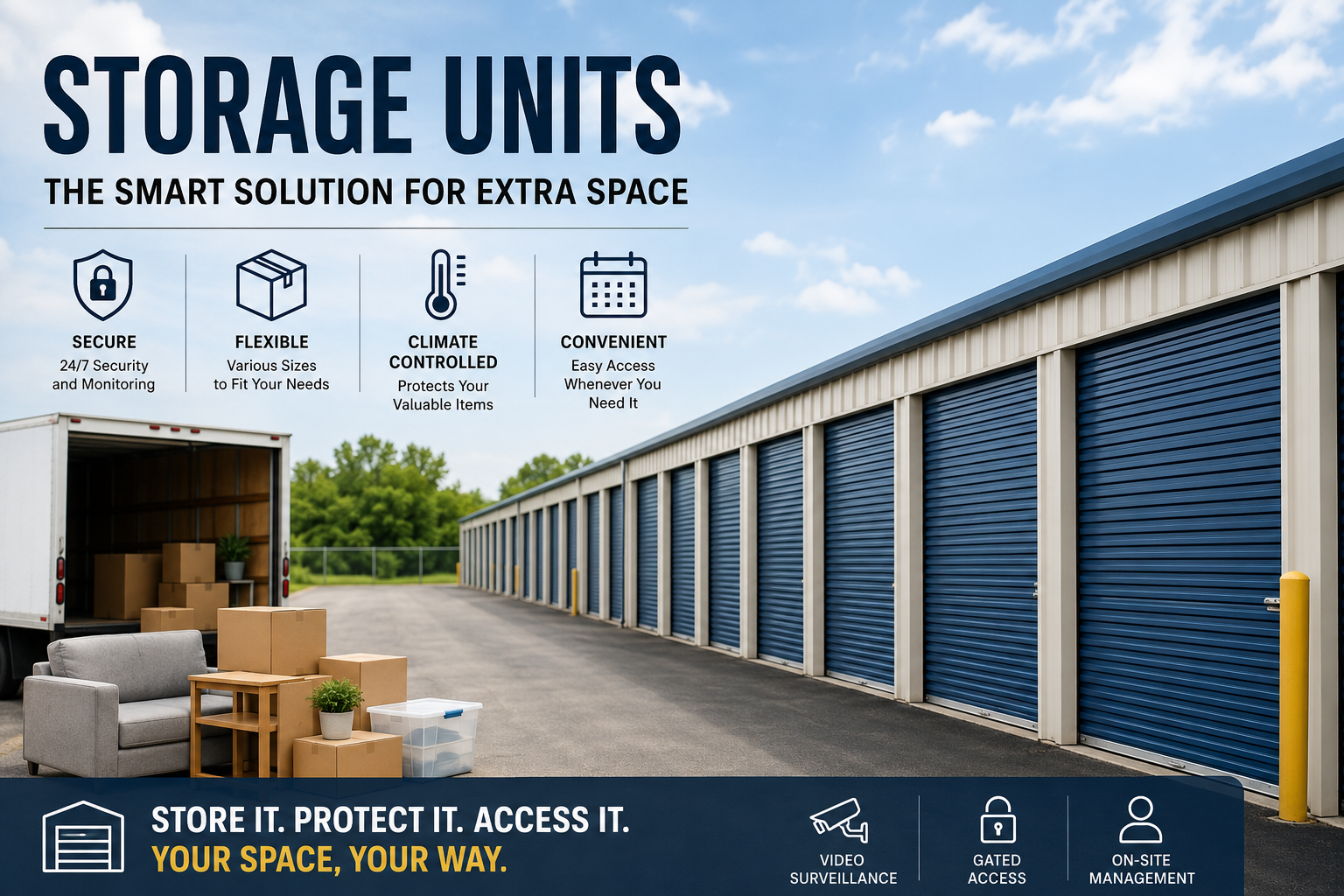
Finding the right storage units can make a huge difference whether you’re moving to a new home, decluttering your living space, storing business inventory, or protecting valuable belongings. With so many options available today, choosing the ideal storage solution isn’t always as straightforward as it seems. The size, security, climate control, accessibility, and pricing all play important roles in determining which unit offers the best value.
Many people rent storage units without fully understanding what features they actually need. This often results in paying for unnecessary space or selecting a facility that doesn’t provide enough protection for valuable items. A little planning before signing a rental agreement can save both money and frustration.
This buying guide is designed for anyone considering renting storage units. Whether you’re storing household furniture, seasonal decorations, office equipment, or personal keepsakes, you’ll learn what to look for, what mistakes to avoid, and how to make an informed decision.
Why Storage Units Have Become More Popular
Modern lifestyles often create the need for additional storage space. Families accumulate more belongings, businesses need room for inventory, and people frequently relocate for work or education. As a result, storage units have become an affordable and flexible solution for keeping items safe without overcrowding homes or offices.
One of the biggest advantages of renting storage units is convenience. Instead of throwing away valuable possessions or paying for a larger house simply to gain storage space, renting a secure unit offers a practical alternative. Many facilities also provide flexible monthly rental agreements, allowing customers to rent only as long as needed.
Today’s storage units are far more advanced than they were years ago. Many facilities now include climate-controlled environments, digital security systems, individual alarms, gated access, surveillance cameras, and online account management. These improvements make self-storage safer and more reliable than ever before.
Understanding the Different Types of Storage Units
Not every storage solution serves the same purpose. Choosing the correct type depends entirely on what you plan to store. Indoor storage units are typically located inside secure buildings and provide better protection against weather and dust. They are ideal for furniture, electronics, artwork, and important documents.
Outdoor storage units offer drive-up access, making loading and unloading much easier. These units are perfect for heavy furniture, appliances, construction materials, and business inventory that requires frequent transportation. Their accessibility often makes them the preferred choice for contractors and small business owners.
Climate-controlled storage units maintain stable temperature and humidity levels throughout the year. These units protect sensitive belongings such as wooden furniture, antiques, musical instruments, photographs, books, electronics, and collectibles from moisture, mold, and extreme temperatures.
Choosing the Right Size
Selecting the proper unit size is one of the most important decisions during the buying process. Renting a unit that is too small creates organization problems, while paying for oversized storage units wastes money every month.
Small storage units usually work well for boxes, seasonal decorations, sports equipment, and small furniture. Medium-sized units can accommodate the contents of a one- or two-bedroom apartment, making them popular for families during renovations or relocations.
Large storage units are designed for full household moves, commercial inventory, large appliances, vehicles, and oversized furniture. If you’re unsure which size you need, create an inventory list before visiting a storage facility. Many companies also offer online size calculators to simplify the decision.
Essential Features to Look For
Security should always be a top priority when comparing storage units. Look for facilities that include gated access, security cameras, bright lighting, individual unit locks, and on-site management. These features significantly reduce the risk of theft and unauthorized access.
Accessibility is another important factor. Some storage units allow 24-hour access, while others operate during business hours only. Consider how often you’ll need to retrieve your belongings before making a decision. Easy access can save considerable time if you plan frequent visits.
Cleanliness and maintenance are equally important. Well-maintained storage units are less likely to attract pests, develop mold, or experience structural problems. Inspect the property carefully before signing a rental agreement.
Climate-Controlled vs Standard Storage Units
One of the biggest questions buyers ask is whether climate-controlled storage units are worth the additional cost. The answer depends entirely on what you’re storing. Sensitive belongings benefit greatly from stable temperatures and humidity levels.
Standard storage unit are usually sufficient for durable items such as lawn equipment, plastic containers, bicycles, tools, and outdoor furniture. These belongings typically tolerate temperature changes without damage.
Climate-controlled storage units become a worthwhile investment if you’re storing electronics, artwork, wooden furniture, leather goods, important paperwork, or family heirlooms. The extra monthly expense often prevents costly damage that could occur over time.
Understanding Storage Unit Pricing
The cost of storage units varies depending on location, size, facility quality, demand, and available amenities. Urban areas generally charge higher rental rates than suburban or rural locations due to limited space and increased demand.
Before renting storage units, ask about additional fees. Some facilities charge administrative costs, insurance fees, lock purchases, late payment penalties, or security deposits. Understanding the total monthly expense helps avoid unexpected surprises.
Comparing multiple facilities is always a smart strategy. While low prices may seem attractive, cheaper storage units sometimes sacrifice security, cleanliness, or customer service. Focus on overall value rather than choosing solely based on price.
Common Mistakes Buyers Should Avoid
One of the most common mistakes is choosing storage units without estimating future storage needs. People often underestimate how much space they actually require, leading to overcrowded units and difficult organization.
Another mistake involves ignoring insurance options. Although many facilities maintain excellent security, accidents such as fires, floods, or unexpected damage can still happen. Insurance provides valuable peace of mind for expensive possessions stored inside the storage unit.
Many renters also fail to organize their belongings properly. Label every box clearly, create walking paths, and place frequently used items near the entrance. Well-organized storage unit save significant time whenever you need access.
Packing Tips for Better Storage
Proper packing extends the life of everything stored inside storage units. Use sturdy cardboard boxes or durable plastic containers that stack easily without collapsing under weight.
Disassemble large furniture whenever possible before placing it inside storage units. Removing table legs, bed frames, or shelving components creates additional space while reducing the risk of damage during transportation.
Cover furniture with breathable fabric instead of plastic whenever possible. Plastic can trap moisture inside storage units, increasing the risk of mold and mildew over long storage periods.
Is Renting Storage Units Worth It?
For many homeowners, renters, students, and business owners, storage units provide an affordable solution that eliminates clutter while protecting valuable possessions. Instead of selling items you may need later, renting extra space offers flexibility during life’s transitions.
Businesses also benefit greatly from storage units by storing inventory, archived documents, promotional materials, and seasonal equipment without leasing larger commercial offices. This approach often reduces operating expenses while maintaining better organization.
When chosen carefully, modern storage units deliver excellent value through convenience, security, and flexibility. The key is selecting the right size, understanding your storage needs, and comparing facilities before making a final decision.
Final Thoughts
Choosing the right storage unit doesn’t have to be difficult. By evaluating security, accessibility, climate control, pricing, and unit size, you can confidently select a storage solution that protects your belongings while staying within your budget.
Whether you’re moving, downsizing, renovating, or simply creating more living space, investing in quality storage units is often one of the smartest decisions you can make. Take time to compare facilities, read customer reviews, inspect the property, and ask questions before signing any rental agreement.
A little research today can help ensure your belongings remain safe, organized, and easily accessible for months or even years to come.