


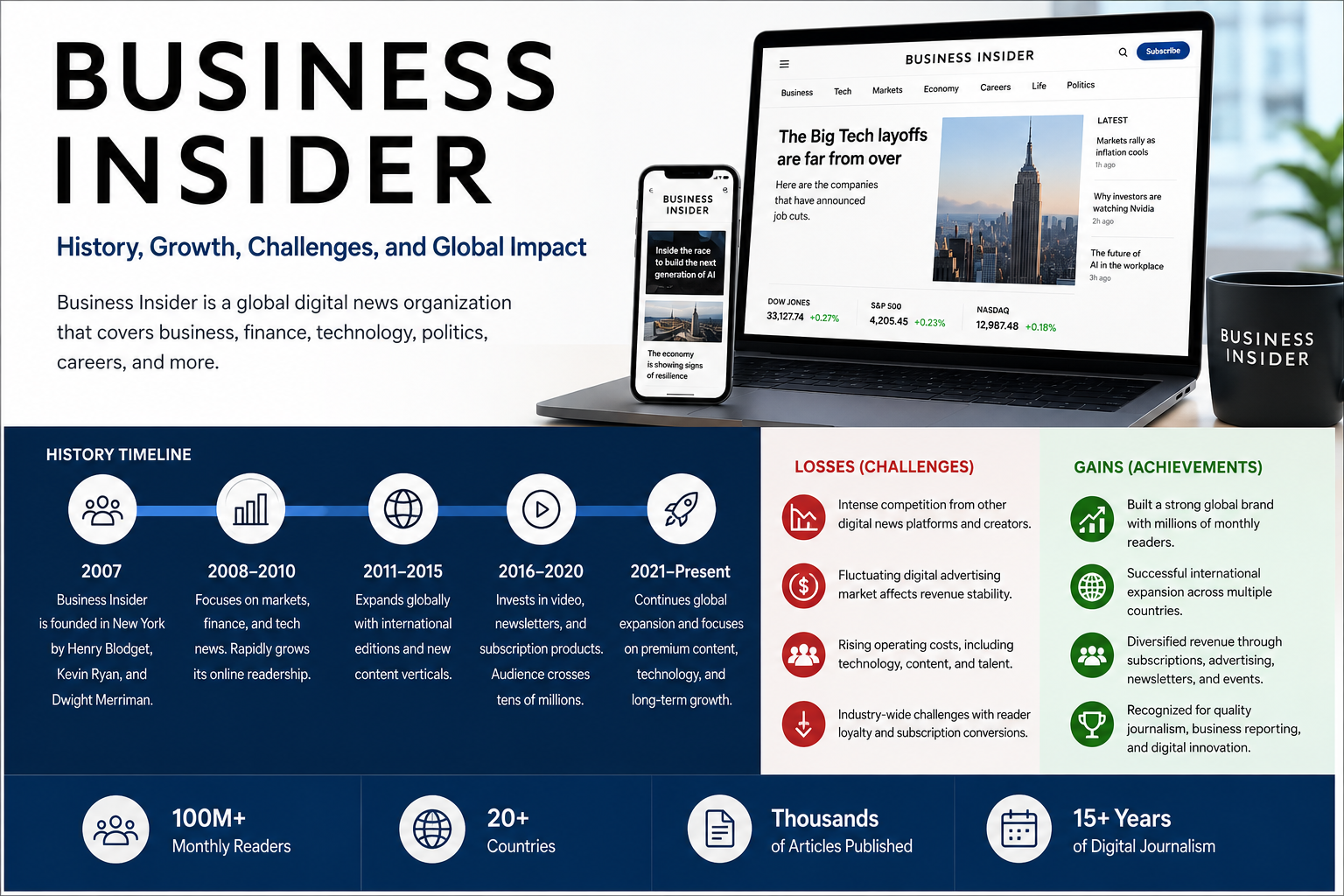
Business Insider is a digital news publication that has become one of the most recognizable names in online business journalism. Since its launch, the company has expanded from a startup focused on business and technology reporting into an international news organization covering finance, markets, politics, careers, science, and lifestyle. Its fast-paced reporting style and digital-first approach have helped it reach millions of readers worldwide.
Unlike many traditional newspapers that transitioned from print to digital, Business Insider was built as an online publication from the beginning. This allowed it to adapt quickly to changing reader habits and capitalize on the growing demand for digital news. Over the years, it has developed a strong presence through its website, newsletters, social media channels, videos, and subscription offerings.
This article provides a neutral overview of Business Insider, exploring its history, growth, business model, major achievements, challenges, and its role in today’s digital media industry.
Early History
Business Insider was founded in 2007 by Henry Blodget, Kevin Ryan, Dwight Merriman, and several other entrepreneurs. The goal was to create a business-focused news platform that delivered timely reporting in a format designed specifically for online readers.
During its early years, the publication concentrated primarily on financial markets, technology companies, startups, and business trends. Its articles were generally shorter and more immediate than traditional newspaper reports, allowing readers to stay informed about breaking developments throughout the day.
As readership increased, Business Insider expanded beyond finance into additional subjects including politics, healthcare, entertainment, travel, careers, and personal finance. This broader editorial strategy helped attract a larger and more diverse audience.
Growth and Expansion
Business Insider experienced rapid growth during the 2010s as digital news consumption increased worldwide. The company launched international editions in multiple countries, allowing it to serve readers with region-specific reporting while maintaining its global business coverage.
Investment in multimedia also contributed to its success. Videos, interactive graphics, podcasts, newsletters, and mobile-friendly articles became an important part of the publication’s strategy. These formats appealed to audiences consuming news across different devices and platforms.
The company’s audience expanded significantly as more professionals, students, entrepreneurs, and investors turned to digital sources for daily business news. Its focus on technology companies, startup ecosystems, and financial markets helped establish a recognizable identity within the online media landscape.
Business Model
Business Insider primarily generates revenue through digital advertising and subscription services. Advertising remains an important source of income, with brands placing display advertisements, sponsored content, and other promotional campaigns across the platform.
The company also offers premium subscription products that provide readers with access to exclusive articles, deeper analysis, and additional reporting not available to free users. This subscription model has become increasingly important as many digital publishers seek to reduce their reliance on advertising revenue alone.
Additional revenue opportunities include partnerships, newsletters, events, video content, and commercial collaborations. Diversifying income sources helps strengthen the company’s long-term financial stability.
Achievements and Successes
One of Business Insider’s biggest achievements has been building a globally recognized digital news brand without relying on a traditional print newspaper. Its online-first strategy allowed the publication to adapt quickly to changes in technology and reader behavior.
The publication has received recognition for investigative journalism, business reporting, technology coverage, and visual storytelling. Its articles frequently cover major corporate developments, financial markets, consumer technology, and economic trends affecting readers worldwide.
Business Insider has also established a strong reputation for covering startups and emerging technologies. Many entrepreneurs, investors, and business professionals follow its reporting to stay informed about innovation and changes within various industries.
Challenges and Financial Pressures
Like many digital media organizations, Business Insider operates within a highly competitive industry. Online publishers compete not only with traditional news organizations but also with independent creators, newsletters, podcasts, social media platforms, and video services for audience attention.
Advertising markets can fluctuate significantly depending on economic conditions. During periods of slower advertising spending, digital publishers often face pressure to manage costs while maintaining high-quality journalism.
The broader media industry has also experienced changes in reader habits, increasing competition, and evolving subscription models. These industry-wide challenges have encouraged publishers, including Business Insider, to continually refine their business strategies and explore new revenue opportunities.
Influence in Digital Journalism
Business Insider has played an important role in demonstrating how digital-first journalism can reach global audiences. Its reporting style, emphasis on accessibility, and use of multimedia have influenced many newer online publications.
The platform regularly covers topics that affect businesses, investors, technology companies, and consumers. By publishing breaking news alongside longer analytical pieces, it serves readers seeking both quick updates and deeper context.
Its combination of business reporting, technology news, and broader current affairs has helped maintain relevance in an increasingly competitive digital media environment.
Conclusion
Business Insider has grown from a startup news website into one of the world’s best-known digital business publications. Through continuous expansion, international reporting, multimedia content, and subscription services, it has built a large global audience interested in business, finance, technology, and current events.
Although the company faces the same competitive and financial challenges affecting much of the digital news industry, it continues to adapt by investing in quality journalism, new digital products, and diversified revenue streams. Its evolution reflects the broader transformation of news publishing in the internet era, making Business Insider an influential example of modern digital journalism.