


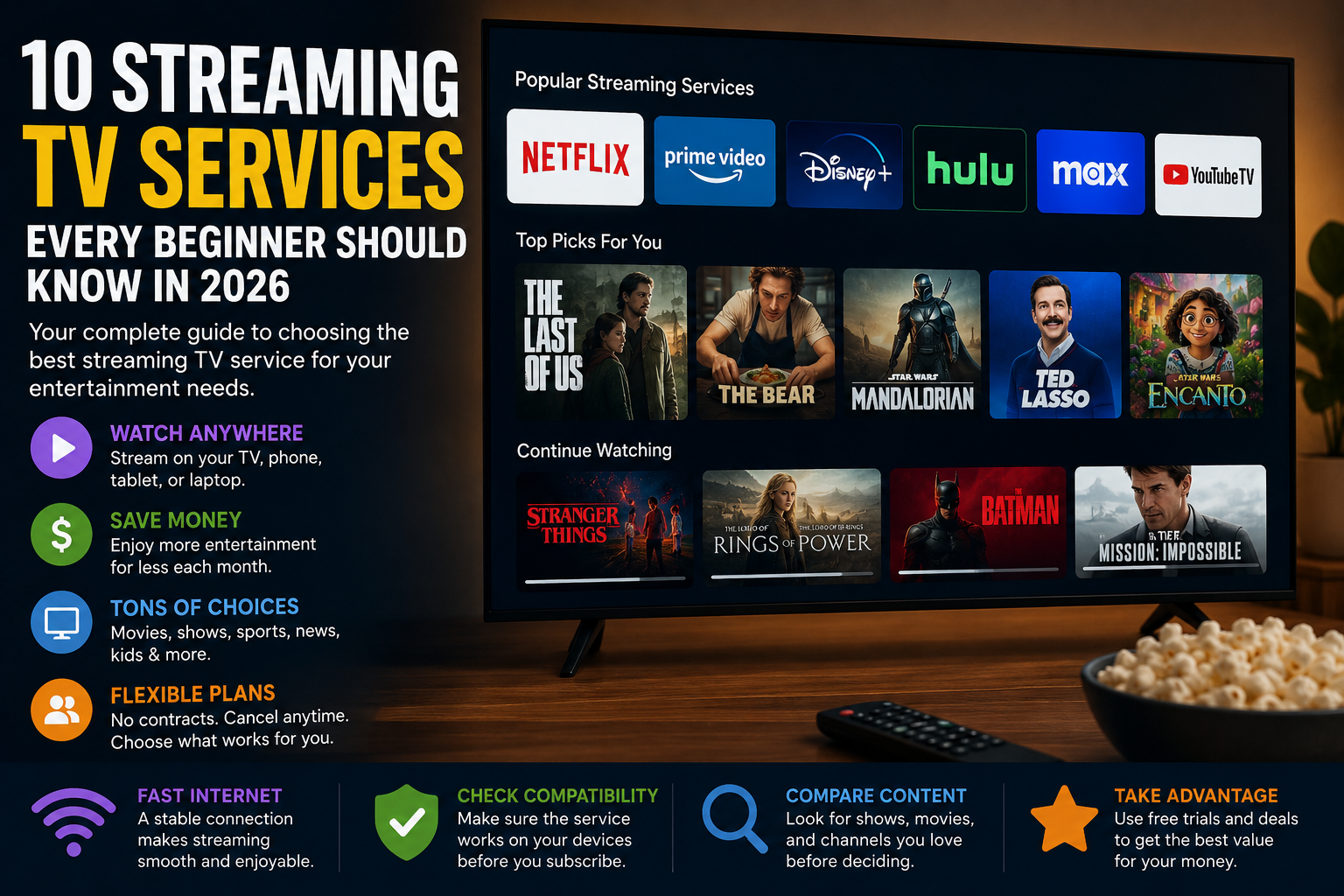
Streaming has completely changed the way people watch television. Instead of paying for expensive cable packages with dozens of channels they never use, viewers can now subscribe to streaming TV services that match their interests and budget. Whether you love movies, live sports, news, or family entertainment, there’s a streaming platform designed for you.
For beginners, choosing among the many streaming TV services can feel overwhelming. Each platform offers different pricing, content libraries, supported devices, and exclusive features. Understanding these differences is the key to finding a service that delivers the best value without unnecessary costs.
In this complete guide, you’ll learn everything you need to know about streaming TV services, including how they work, their benefits, the different types available, and the factors you should consider before subscribing. By the end, you’ll be confident in selecting the right streaming option for your entertainment needs.
What Are Streaming TV Services?
Streaming TV services are online platforms that deliver television shows, movies, live channels, and other video content over the internet. Instead of relying on cable or satellite connections, these services let you watch your favorite programs using an internet-connected device.
One of the biggest advantages of streaming TV services is flexibility. You can watch content on smart TVs, laptops, tablets, smartphones, gaming consoles, and streaming devices whenever it’s convenient. This means you’re no longer tied to a television schedule or a specific location.
Most streaming TV services operate through monthly subscriptions, although some also offer free plans supported by advertisements. This gives users the freedom to choose a plan that fits both their viewing habits and their budget.
How Streaming TV Services Work
The technology behind streaming TV services is surprisingly simple from the user’s perspective. Instead of downloading an entire video before watching, the platform sends small pieces of the video continuously over your internet connection. This allows playback to begin almost instantly.
When you press play, the service automatically adjusts video quality based on your internet speed. If your connection is fast, you’ll likely enjoy HD or even 4K streaming. If your connection slows down, the service reduces the video quality temporarily to prevent interruptions.
Behind the scenes, powerful servers deliver content from data centers around the world. This infrastructure allows streaming TV services to provide reliable playback to millions of viewers simultaneously, even during popular live events or new series releases.
Different Types of Streaming TV Services
Not all streaming TV services are the same. Understanding the main categories can help you narrow your options and avoid paying for features you don’t actually need.
The first category is on-demand streaming. These platforms give subscribers access to large libraries of movies and television series that can be watched whenever they choose. Viewers control exactly what they watch and when they watch it.
The second category includes live TV streaming. These services replicate the traditional cable experience by offering live broadcasts of news, sports, entertainment, and local channels over the internet. They are ideal for viewers who still enjoy scheduled programming but want more flexibility than cable provides.
A third category focuses on free ad-supported streaming. These streaming TV services allow users to watch movies and shows without paying a subscription fee. Instead, advertisements support the platform, making it an attractive choice for budget-conscious viewers.
Benefits of Streaming TV Services
One reason streaming TV services continue to grow in popularity is their convenience. You can start watching on your television, continue on your smartphone during a commute, and finish on your laptop later in the day. This level of flexibility simply isn’t possible with traditional cable television.
Another major benefit is cost savings. Many households spend significantly less by subscribing only to the streaming TV services they actually use. Instead of paying for hundreds of unwanted channels, users can customize their entertainment based on personal preferences.
Streaming platforms also update their libraries regularly with new movies, original series, documentaries, and exclusive content. This constant flow of fresh entertainment gives subscribers plenty of reasons to return without feeling limited by repetitive programming.
Features to Look for Before Choosing a Streaming Service
Before subscribing to any of the available streaming TV services, it’s important to compare their features rather than focusing only on the monthly price. A slightly more expensive service may offer better value if it includes content you watch regularly.
Content selection should always come first. Some platforms specialize in blockbuster movies, while others focus on television series, live sports, children’s programming, or international content. Choosing a service that matches your interests leads to a much better viewing experience.
You should also evaluate streaming quality, supported devices, offline downloads, parental controls, simultaneous streams, and personalized recommendations. These features may seem minor initially, but they often make a noticeable difference in everyday use.
Popular Devices That Support Streaming TV Services
One of the greatest strengths of modern streaming TV services is their broad compatibility with devices. Most major platforms are designed to work across multiple operating systems, making it easy to watch your favorite content wherever you are.
Smart TVs provide one of the most convenient ways to access streaming apps. Many modern televisions come with popular platforms pre-installed, allowing users to sign in and start watching within minutes without purchasing additional hardware.
Streaming devices, gaming consoles, smartphones, tablets, and laptops also support nearly all major streaming TV services. This flexibility ensures you can continue watching whether you’re relaxing at home or traveling away from your primary television.
Understanding Subscription Costs and Pricing
One of the biggest reasons people switch to streaming TV services is the ability to control their entertainment budget. Unlike traditional cable packages that often include long-term contracts and hidden fees, most streaming platforms offer simple monthly subscriptions that can be canceled at any time.
Pricing varies depending on the features included. Basic plans are generally the most affordable and may include advertisements or limit streaming quality. Premium plans often remove ads, unlock higher video resolutions such as 4K, and allow more devices to stream simultaneously.
While subscribing to several streaming TV services can still cost less than cable, it’s important to review your subscriptions regularly. Many users forget about services they rarely watch, leading to unnecessary monthly expenses. Rotating subscriptions throughout the year is an effective way to enjoy different content while keeping costs under control.
Internet Speed Requirements for Smooth Streaming
A stable internet connection plays a major role in your experience with streaming TV services. Even the best platform can’t provide smooth playback if your connection is too slow or inconsistent.
For standard-definition streaming, a relatively modest internet speed is usually enough. High-definition content requires faster speeds, while 4K Ultra HD streaming demands a stronger and more stable connection. Households with multiple people streaming at the same time should consider higher-speed internet plans to prevent buffering.
Using a modern Wi-Fi router can also improve streaming performance. If possible, position your router in a central location or connect your streaming device through an Ethernet cable for the most reliable experience. These small adjustments can make streaming TV services perform much more consistently.
Common Mistakes Beginners Should Avoid
Many first-time users subscribe to multiple streaming TV services without comparing their content libraries. This often results in paying for several platforms that offer similar movies and shows. Researching available content beforehand helps you avoid unnecessary subscriptions.
Another common mistake is overlooking free trials. Many platforms allow new users to explore their features before committing to a paid plan. Taking advantage of these trials makes it easier to determine whether a service truly meets your entertainment needs.
Some beginners also ignore account settings after signing up. Configuring parental controls, adjusting video quality, and creating separate user profiles can significantly improve the overall experience. Spending just a few minutes customizing these settings ensures you get the most out of your streaming TV services.
Tips for Saving Money on Streaming TV Services
You don’t need to spend a fortune to enjoy quality entertainment. One of the smartest strategies is to subscribe only to the streaming TV services you actively use. If a platform doesn’t have new content you’re interested in, cancel it temporarily and return later when new releases become available.
Many providers also offer discounted annual subscriptions or bundle deals that combine multiple services into a single package. These promotions can reduce your overall entertainment costs while giving you access to a broader selection of content.
Sharing plans within your household, where permitted by the service’s terms, is another practical way to maximize value. Family plans often allow multiple user profiles and simultaneous streams, making them a cost-effective option for households with several viewers.
How to Choose the Right Streaming TV Service
Choosing among today’s streaming TV services starts with identifying what you enjoy watching most. Movie lovers may prioritize extensive film libraries, while sports fans should focus on platforms that provide live events and sports channels. Families with children may prefer services offering strong parental controls and educational programming.
Your budget is another important consideration. Instead of subscribing to every available platform, compare pricing, available features, and exclusive content. A single well-chosen subscription often delivers more value than multiple services you rarely use.
Device compatibility should also influence your decision. Make sure the service supports your smart TV, smartphone, tablet, gaming console, or streaming device. Fortunately, most leading streaming TV services are compatible with a wide variety of modern devices, making setup quick and straightforward.
Frequently Asked Questions
Many people ask whether streaming TV services are better than cable television. The answer depends on your viewing habits. If you prefer flexibility, on-demand content, and lower monthly costs, streaming is often the better option. However, viewers who rely heavily on local channels or regional sports may still find some value in traditional television packages.
Another common question is whether you need a smart TV. The answer is no. While smart TVs make streaming convenient, you can also access streaming TV services through streaming sticks, gaming consoles, smartphones, tablets, or computers connected to the internet.
Users also wonder if they can watch while traveling. In most cases, yes. As long as you have a compatible device and a reliable internet connection, you can access your favorite streaming TV services from almost anywhere, although some content may vary depending on regional licensing restrictions.
Conclusion
Streaming TV services have transformed home entertainment by giving viewers greater flexibility, better value, and access to an enormous variety of content. Whether you’re interested in blockbuster movies, live sports, original series, documentaries, or family-friendly programming, there’s a streaming platform designed to match your preferences.
For beginners, the key is to start simple. Compare available options, understand your viewing habits, and choose one or two streaming TV services that best fit your budget and interests. As your entertainment needs evolve, you can always explore additional platforms or rotate subscriptions throughout the year.
With the right internet connection, compatible devices, and a carefully selected subscription, streaming TV services offer an enjoyable and convenient way to watch your favorite content whenever and wherever you want. By following the tips in this guide, you’ll be well prepared to make informed decisions and enjoy a seamless streaming experience for years to come.