


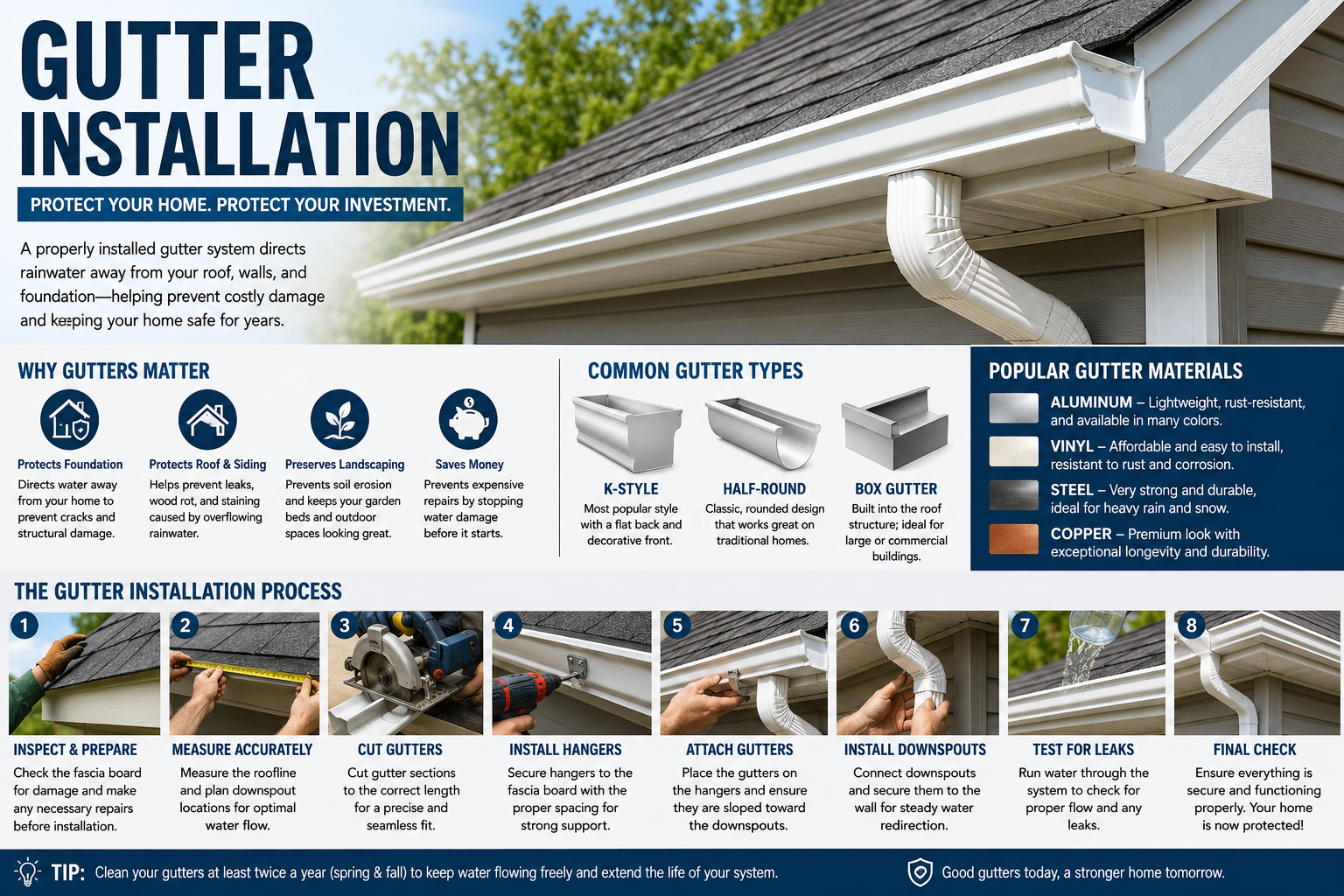
Protecting your home from water damage starts with an effective drainage system, and that begins with proper gutter installation. Gutters may not be the most noticeable part of a house, but they play a vital role in directing rainwater away from your roof, foundation, siding, and landscaping. Without a reliable gutter system, even a small amount of rainfall can lead to expensive structural problems over time.
Many homeowners overlook the importance of gutter installation until they experience issues such as basement flooding, soil erosion, or damaged exterior walls. A professionally installed gutter system helps prevent these problems by safely channeling rainwater toward designated drainage areas. It also reduces the risk of mold growth, wood rot, and foundation cracks caused by excess moisture.
This complete guide explains everything homeowners need to know about gutter installation, from understanding different gutter types and materials to planning the project correctly. Whether you’re installing gutters on a new home or replacing an aging system, this guide will help you make informed decisions.
What Is Gutter Installation?
Gutter installation is the process of attaching a rainwater drainage system along the edges of a roof. The gutters collect rainwater as it flows off the roof and direct it through downspouts, safely carrying the water away from the home’s foundation. This simple system protects both the structure and the surrounding landscape.
A properly designed drainage system does much more than handle rainfall. It prevents water from pooling around the base of the house, reduces erosion in flower beds, and protects driveways, walkways, and exterior walls from unnecessary water exposure. Quality gutter installation is an investment in the long-term health of your property.
Modern gutter systems are available in various sizes, materials, and designs to suit different architectural styles. Choosing the right option ensures your gutters not only perform efficiently but also complement the overall appearance of your home.
Why Gutter Installation Is Important
One of the biggest benefits of gutter installation is protecting your home’s foundation. When rainwater collects around the base of a house, the soil expands and contracts, which can eventually lead to foundation cracks and structural movement. A properly functioning gutter system directs water away before these issues develop.
Roof protection is another important advantage. Without gutters, rainwater can flow beneath roofing materials, causing leaks, damaged fascia boards, and rotting wood. Proper drainage extends the lifespan of your roof while reducing future repair costs.
Effective water management also improves the appearance of your property. Preventing water stains, muddy landscaping, and soil erosion helps maintain curb appeal while reducing maintenance throughout the year.
Different Types of Gutters
Homeowners can choose from several gutter styles, each offering unique benefits. K-style gutters are among the most common because they have a decorative profile that resembles crown molding while providing excellent water capacity. They are suitable for most modern homes.
Half-round gutters have a smooth, curved design often found on historic or traditional homes. Although they generally hold slightly less water than K-style systems, they are easier to clean because debris is less likely to become trapped inside.
Box gutters are another option, primarily used on commercial buildings or larger homes. They are built directly into the roof structure and can handle significant amounts of rainfall. Selecting the right style depends on your home’s architecture, climate, and drainage requirements.
Common Materials Used for Gutter Installation
The material you choose significantly affects the durability, appearance, and maintenance requirements of your gutter system. Aluminum is one of the most popular options because it is lightweight, rust-resistant, affordable, and available in many colors to match different home exteriors.
Vinyl gutters are another budget-friendly choice. They are easy to install and resistant to corrosion, making them attractive for homeowners looking for an economical solution. However, vinyl may become brittle over time in areas with extreme temperatures.
Steel and copper gutters provide exceptional strength and longevity. Steel performs well in regions with heavy snowfall, while copper develops a distinctive natural patina that many homeowners find visually appealing. Although premium materials cost more initially, they often offer outstanding long-term value.
Planning Before Gutter Installation
Careful planning is essential before beginning any gutter installation project. Start by evaluating your roof size, slope, and local rainfall levels. Homes located in areas with frequent heavy rain often require larger gutters and additional downspouts to manage increased water flow effectively.
Measuring accurately is another important step. Determine the total length of the roofline, identify downspout locations, and check for obstacles such as chimneys, vents, or trees. Proper measurements help ensure you purchase the correct amount of materials while minimizing waste.
Finally, consider local building codes and neighborhood requirements. Some communities have specific regulations regarding drainage systems, especially for new construction projects. Reviewing these requirements before starting your gutter installation helps prevent costly mistakes and ensures compliance.
The Gutter Installation Process
Once the planning stage is complete, the actual gutter installation process can begin. The first step involves preparing the roof edge by inspecting the fascia boards for signs of rot, cracks, or water damage. Any damaged wood should be repaired or replaced before new gutters are attached to ensure a secure foundation.
After the fascia is ready, installers measure and cut each gutter section to the correct length. Brackets or hangers are then mounted at regular intervals to provide strong support. The gutters are installed with a slight slope toward the downspouts so rainwater flows efficiently instead of collecting inside the system.
The final step includes attaching downspouts and testing the entire setup. Water is run through the gutters to check for leaks, proper drainage, and secure connections. A successful gutter installation should allow rainwater to move smoothly away from the home without overflowing or pooling.
How to Maintain Your Gutters
Regular maintenance keeps your gutter system working efficiently and extends its lifespan. Leaves, twigs, dirt, and other debris can accumulate over time, restricting water flow and increasing the risk of clogs. Cleaning the gutters at least twice a year, especially during spring and fall, helps prevent these issues.
Inspect the system after heavy storms or strong winds. Look for loose brackets, sagging sections, leaks, or damaged downspouts. Identifying minor problems early often prevents more expensive repairs later and keeps the drainage system functioning properly.
It is also important to ensure that downspouts remain clear and discharge water several feet away from the home’s foundation. Adding downspout extensions or splash blocks can further improve drainage and reduce soil erosion around the property.
Common Gutter Installation Mistakes
One of the most common mistakes is installing gutters without the correct slope. If the angle is too flat, water may pool inside the gutter instead of flowing toward the downspouts. Too much slope, on the other hand, can affect both performance and appearance.
Another frequent error is spacing the hangers too far apart. Inadequate support allows gutters to sag over time, particularly after heavy rainfall or snowfall. Properly spaced brackets help maintain stability and improve the system’s durability.
Some homeowners also underestimate the importance of using the correct gutter size. Installing gutters that are too small for the roof’s water runoff can lead to overflowing during heavy rain. Selecting the appropriate dimensions ensures efficient water management throughout the year.
Should You Install Gutter Guards?
Gutter guards are designed to reduce the amount of debris entering the gutter system while allowing rainwater to pass through. They are available in several styles, including mesh screens, foam inserts, and surface-tension covers.
One major advantage of gutter guards is reduced maintenance. Although they don’t eliminate cleaning entirely, they significantly decrease the amount of leaves and debris that collect inside the gutters. This helps improve water flow and lowers the risk of clogs.
However, gutter guards are not suitable for every home. Their effectiveness depends on the surrounding environment, nearby trees, and the specific design of the product. Comparing different options before purchasing helps homeowners choose the most suitable solution.
How Much Does Gutter Installation Cost?
The cost of gutter installation varies depending on several factors, including the size of the home, the material selected, labor rates, and any additional accessories such as gutter guards. Aluminum systems are generally among the most affordable, while copper gutters are considered a premium option.
Homes with complex roof designs or multiple stories often require more labor and specialized equipment, increasing the total project cost. Additional repairs to fascia boards or roof edges can also affect the final price.
Although professional installation involves an upfront investment, it often reduces future repair expenses by protecting the home’s foundation, roof, landscaping, and exterior walls from costly water damage.
Frequently Asked Questions About Gutter Installation
Many homeowners wonder how often gutters should be replaced. Most aluminum systems last around 20 years with proper maintenance, while copper gutters can remain functional for several decades. Regular inspections help determine when replacement becomes necessary.
Another common question is whether gutter installation is a DIY project. While experienced homeowners may install simple systems themselves, professional installation ensures proper slope, secure mounting, and compliance with local building codes.
People also ask about the best season for installing new gutters. Spring, summer, and early fall are generally ideal because weather conditions are more predictable, allowing installation to be completed safely and efficiently.
Conclusion
Proper gutter installation is one of the most effective ways to protect a home from long-term water damage. A well-designed drainage system directs rainwater away from the roof, foundation, landscaping, and exterior walls, helping prevent expensive structural repairs while preserving your property’s appearance.
Choosing the right materials, planning carefully, and maintaining the system regularly all contribute to long-lasting performance. Whether you select aluminum, vinyl, steel, or copper gutters, investing in quality products and proper installation will provide years of reliable protection.
For homeowners looking to improve both the function and value of their property, gutter installation is a worthwhile investment. With the right planning and routine maintenance, your gutter system will continue protecting your home through every season while giving you greater peace of mind.