


Blocked drains are one of the most frustrating plumbing problems homeowners and businesses face. A slow-draining sink, recurring toilet clogs, or foul-smelling sewer lines can quickly turn into expensive repairs if left untreated. While drain snakes and chemical cleaners may provide temporary relief, they often fail to remove the buildup causing the issue. This is where hydro jetting becomes one of the most effective plumbing solutions available.
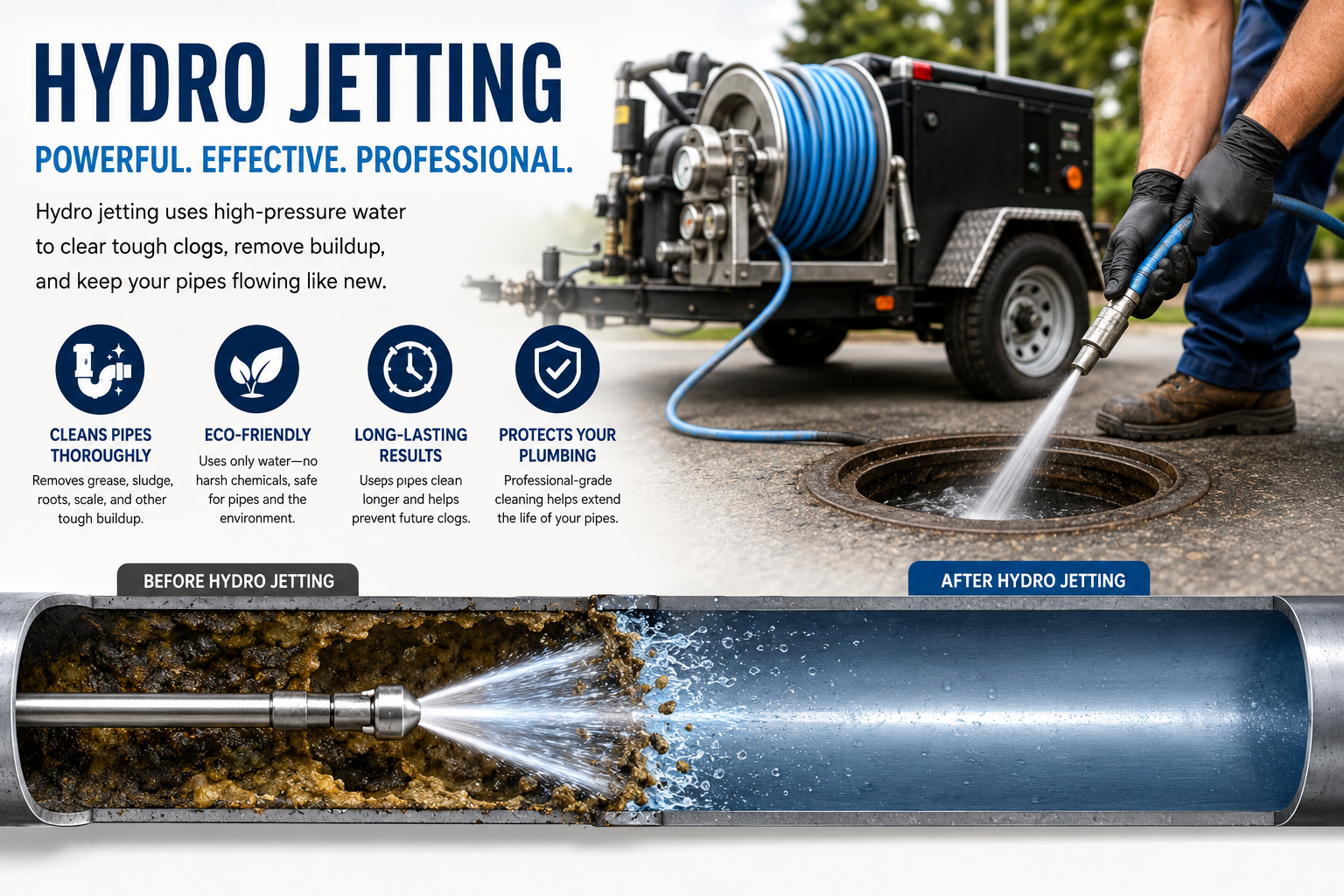
Hydro jetting is a professional drain-cleaning method that uses highly pressurized water to remove grease, sludge, tree roots, mineral deposits, and other stubborn debris from inside plumbing pipes. Unlike traditional drain cleaning methods that simply punch a hole through the blockage, hydro jetting thoroughly cleans the interior walls of the pipes, helping restore proper water flow.
In this complete guide, you’ll learn what hydro jetting is, how it works, its benefits, when it’s recommended, potential drawbacks, and why many plumbing professionals consider it one of the best long-term drain maintenance solutions.
What Is Hydro Jetting?
Hydro jetting is a plumbing technique that clears clogged or dirty pipes by blasting water through them at extremely high pressure. Depending on the equipment and application, water pressure can reach several thousand PSI (pounds per square inch), making it powerful enough to remove even the toughest blockages.
Unlike traditional drain snakes that create a narrow path through a clog, the jetting cleans the entire interior surface of the pipe. This removes years of accumulated grease, soap residue, food particles, hair, mineral buildup, and even invasive tree roots in some situations.
Professional plumbers typically inspect the pipes using a sewer camera before performing hydro jetting. This ensures the pipes are structurally sound and helps identify the exact cause and location of the blockage before high-pressure cleaning begins.
How Hydro Jetting Works
The process of hydro jetting begins with a thorough inspection of the plumbing system. Most professionals use a specialized camera to examine the inside of the pipes. This step helps locate blockages, detect pipe damage, and determine whether hydro jetting is the appropriate solution.
Once the inspection is complete, a flexible hose with a specially designed nozzle is inserted into the drain or sewer line. The nozzle directs powerful streams of water both forward and backward. The forward jets break apart stubborn obstructions, while the backward jets propel the hose through the pipe and wash loosened debris toward the sewer system.
As the high-pressure water moves through the plumbing system, it scrubs the interior pipe walls clean. Grease, sludge, soap scum, scale, and accumulated debris are flushed away, leaving the pipe much cleaner than traditional drain-cleaning methods typically achieve.
Common Problems Hydro Jetting Can Solve
One of the biggest advantages of hydro jetting is its ability to tackle a wide variety of plumbing issues.
Kitchen drains often become clogged with grease, cooking oil, food particles, and soap residue. Over time, these materials harden and restrict water flow. Hydro jetting removes these stubborn layers far more effectively than chemical cleaners or basic drain snakes.
Bathroom plumbing also benefits from the jetting. Hair, toothpaste, soap buildup, and mineral deposits frequently accumulate inside sink, shower, and bathtub drains. The powerful water pressure clears these materials while restoring the pipe’s original flow capacity.
Commercial properties such as restaurants, hotels, apartment buildings, and office complexes often use hydro jetting as preventative maintenance. Frequent cleaning helps avoid costly emergency plumbing repairs and keeps drainage systems operating efficiently.
Benefits of Hydro Jetting
One reason many plumbing professionals recommend hydro jetting is because it provides a more complete cleaning solution than traditional drain-clearing methods.
First, This jetting offers exceptional cleaning performance. Rather than punching through one section of a clog, it removes buildup throughout the entire pipe. This significantly reduces the chance of recurring blockages.
Another major benefit is that hydro jetting uses only water. Unlike harsh chemical drain cleaners, it does not introduce corrosive substances into the plumbing system or the environment. This makes it a more environmentally friendly option for many households and businesses.
This jetting can also improve the overall lifespan of plumbing systems by preventing excessive buildup. Regular maintenance reduces strain on pipes and helps maintain efficient water flow for years to come.
When Should You Choose Hydro Jetting?
Not every clogged drain requires hydro jetting, but certain situations make it an excellent choice.
If your drains clog repeatedly despite using drain snakes or other cleaning methods, hydro jetting may address the root cause by removing the accumulated buildup inside the pipes rather than just clearing a temporary path.
Homes with older plumbing systems that frequently experience slow drainage can also benefit. Years of grease, soap, and mineral deposits often narrow the pipe interior, reducing water flow. This jetting restores much of the original pipe diameter by removing these deposits.
Businesses that rely heavily on plumbing systems, especially restaurants and food service establishments, often schedule regular hydro jetting maintenance to prevent grease buildup from causing expensive plumbing emergencies.
Are There Any Risks?
Although hydro jetting is highly effective, it is not suitable for every plumbing system.
Older or severely damaged pipes may not withstand high-pressure water. If pipes have significant cracks, corrosion, or structural weakness, hydro jetting could potentially worsen existing damage. This is why a professional inspection is always recommended before the procedure begins.
Improper use by inexperienced individuals can also create problems. Professional plumbers understand how to adjust water pressure according to pipe material, diameter, and condition. Attempting hydro jetting without proper training or equipment can damage plumbing systems.
Finally, hydro jetting requires specialized equipment and expertise, making it more expensive than simple drain cleaning. However, many homeowners find the long-term benefits outweigh the initial investment because recurring blockages become less frequent.
Hydro Jetting vs Traditional Drain Cleaning
When comparing hydro jetting with traditional drain cleaning methods, several important differences become clear.
Drain snakes work by breaking through a blockage to restore water flow. While effective for many simple clogs, they usually leave much of the surrounding buildup attached to the pipe walls. As a result, blockages often return relatively quickly.
Chemical drain cleaners dissolve some materials but may damage pipes if used repeatedly. They can also struggle against severe grease buildup, mineral deposits, and tree roots. Additionally, their environmental impact makes them less desirable for regular maintenance.
Hydro jetting, by comparison, provides a comprehensive cleaning solution. Instead of simply opening a narrow passage, it thoroughly cleans the entire pipe interior, helping restore maximum flow and reducing the likelihood of future clogs.
Tips for Maintaining Clean Drains After Hydro Jetting
After investing in hydro jetting, proper maintenance helps keep plumbing systems working efficiently.
Avoid pouring grease, cooking oil, coffee grounds, and food scraps down kitchen drains. These materials gradually accumulate and eventually create new blockages, even in recently cleaned pipes.
Install drain strainers in sinks and showers to catch hair, food particles, and other debris before they enter the plumbing system. Simple preventative measures often reduce the need for future drain cleaning.
Scheduling periodic plumbing inspections is another smart strategy. Early detection of buildup or developing problems allows professionals to recommend maintenance before serious blockages occur.
Is Hydro Jetting Worth It?
For homeowners dealing with stubborn or recurring drain problems, hydro jetting is often one of the best long-term plumbing solutions available.
Although the upfront cost may be higher than basic drain cleaning, the thorough results frequently reduce future maintenance expenses. Cleaner pipes mean fewer blockages, improved drainage, and less risk of emergency plumbing repairs.
Businesses can benefit even more from preventative hydro jetting maintenance. Keeping plumbing systems free from grease and debris helps minimise downtime and avoid costly service interruptions.
Ultimately, hydro jetting offers a powerful combination of efficiency, reliability, and long-lasting performance that makes it a worthwhile investment for many residential and commercial plumbing systems.
Conclusion
Maintaining a healthy plumbing system requires more than simply clearing occasional clogs. Hydro jetting provides a deep, professional cleaning solution that removes years of accumulated grease, sludge, mineral deposits, and debris from inside your pipes. By thoroughly cleaning the entire pipe rather than just opening a small pathway, it helps restore optimal water flow and significantly reduces the risk of recurring blockages.
Whether you’re a homeowner struggling with persistent drain issues or a business looking to maintain a high-performing plumbing system, jetting offers an effective, environmentally friendly, and long-lasting solution. When performed by a qualified plumbing professional after a proper inspection, it can improve drain performance, extend the life of your plumbing, and help you avoid expensive repairs in the future.