


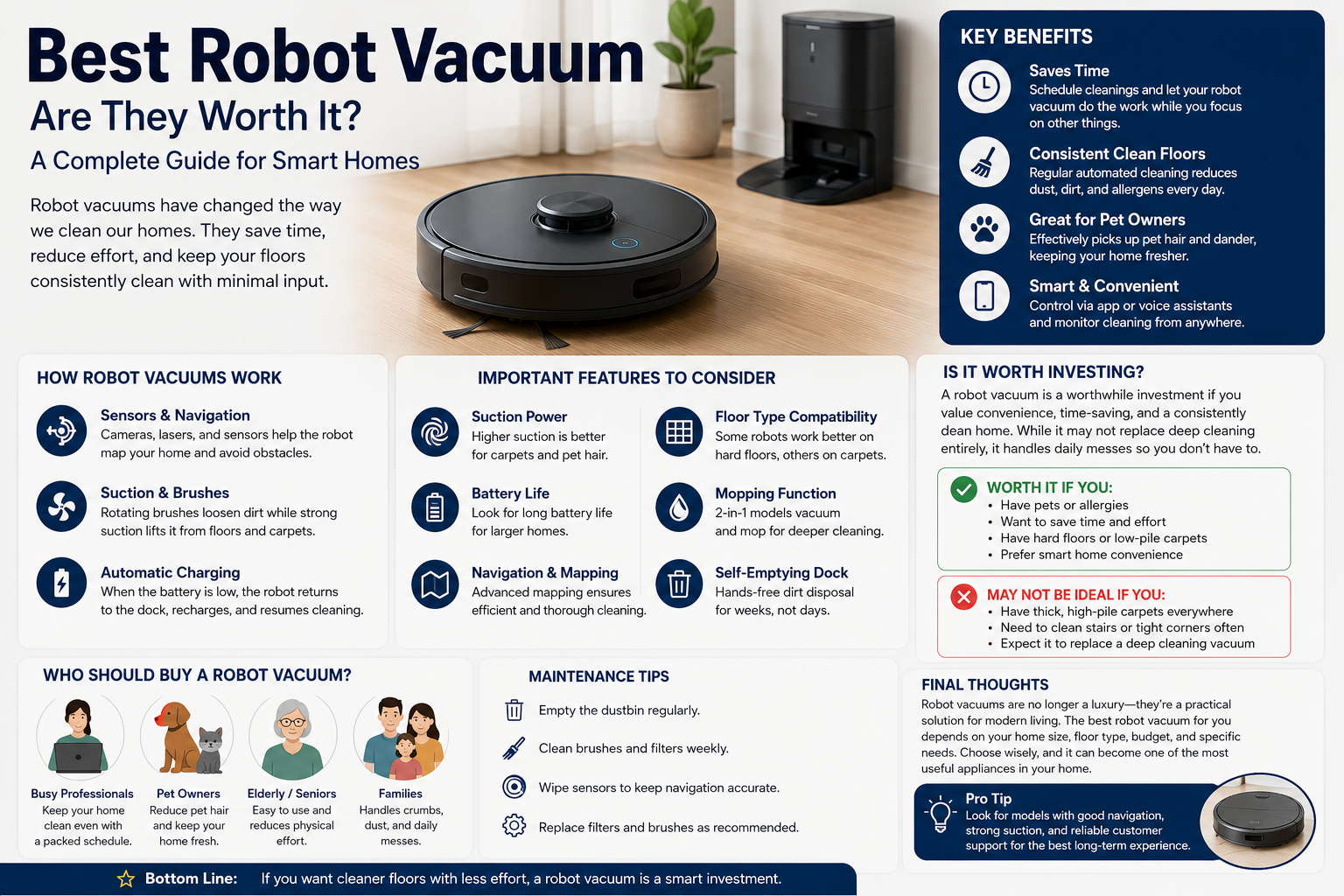
Robot vacuums have become one of the most popular smart home appliances in recent years. Designed to automate one of the most time-consuming household chores, these devices can clean floors with minimal effort from the owner. Modern models offer advanced navigation, smartphone controls, automatic charging, and even self-emptying dustbins, making them an appealing option for busy households.
As technology has improved, robot vacuums have evolved from simple cleaning gadgets into intelligent home assistants. Many can map rooms, avoid obstacles, recognize different floor types, and clean on a schedule. Some premium models even combine vacuuming and mopping in a single device, making them even more versatile.
However, purchasing a robot vacuum is an investment. Prices range from budget-friendly models to premium devices that cost several hundred dollars. Before buying one, it’s important to understand what they do well, where they fall short, and whether they fit your home’s needs.
How Robot Vacuums Work
Robot vacuums use motors, rotating brushes, sensors, and suction to collect dust, dirt, pet hair, and small debris from floors. As they move around a room, they continuously detect furniture, walls, and other obstacles to navigate efficiently.
Many modern models create digital maps of your home, allowing them to clean methodically instead of moving randomly. Through companion mobile apps, users can create cleaning schedules, set no-go zones, and monitor cleaning progress from anywhere.
Higher-end models include features such as automatic dirt disposal, object recognition, voice assistant compatibility, and mopping functions, making daily floor maintenance even more convenient.
Advantages of Owning a Robot Vacuum
The biggest advantage is convenience. Instead of manually vacuuming every few days, homeowners can schedule automatic cleaning sessions even while they are at work or asleep.
Robot vacuums are especially useful for households with pets. Frequent cleaning helps reduce pet hair, dust, and allergens that quickly accumulate on hard floors and low-pile carpets.
They also clean under beds, sofas, and furniture where traditional upright vacuums can be difficult to maneuver. Regular automated cleaning often keeps homes looking cleaner between deeper manual cleaning sessions.
Limitations to Consider
Although robot vacuums are highly capable, they are not perfect replacements for traditional vacuum cleaners. Deep-cleaning thick carpets, cleaning stairs, or removing heavy debris often still requires a full-sized vacuum.
Homes with many loose cables, children’s toys, or cluttered floors may require preparation before each cleaning cycle. Even advanced obstacle detection systems cannot avoid every small object.
Battery life, maintenance, and replacement parts should also be considered. Brushes, filters, and batteries eventually wear out and require periodic replacement to maintain peak performance.
Is Buying One a Good Investment?
For many homeowners, a robot vacuum can be a worthwhile investment because it saves time and encourages more consistent cleaning. People with busy schedules, pets, allergies, or large hard-floor areas often notice the greatest benefits.
If your goal is spotless deep cleaning every day, a robot vacuum alone may not meet all expectations. Most households still benefit from occasional use of a traditional vacuum for detailed cleaning and hard-to-reach areas.
The overall value depends on your lifestyle. If convenience, automation, and maintaining cleaner floors with minimal effort are priorities, investing in a quality robot vacuum can provide excellent long-term value.
Who Should Consider Buying One?
Robot vacuums are particularly well suited for people who work long hours, families with children, pet owners, and anyone who wants to reduce the time spent on everyday housework.
They are also a practical option for older adults or individuals with limited mobility who may find pushing a heavy vacuum cleaner difficult.
On the other hand, if you live in a very small apartment with minimal flooring to clean or have mostly thick carpeting and stairs, a robot vacuum may provide fewer advantages relative to its cost.
Final Thoughts
Robot vacuums have become increasingly capable, combining smart navigation, automated scheduling, and efficient daily cleaning into a compact appliance. While they cannot completely replace traditional vacuum cleaners in every situation, they significantly reduce routine cleaning effort and help maintain cleaner floors throughout the week.
For homeowners who value convenience and smart home technology, a robot vacuum is often a worthwhile purchase. Choosing the right model based on your home’s layout, flooring type, and budget is more important than simply buying the most expensive option. With realistic expectations and proper maintenance, a robot vacuum can become one of the most useful additions to a modern home.