


Snapchat is known for introducing creative features that make conversations more engaging, and one of the most talked-about additions is Snap Planets. If you’ve ever subscribed to Snapchat+, you may have noticed colorful planets appearing around your Bitmoji and wondered what they actually represent. While the feature looks fun and playful, it also provides insight into your closest friendships on the platform.
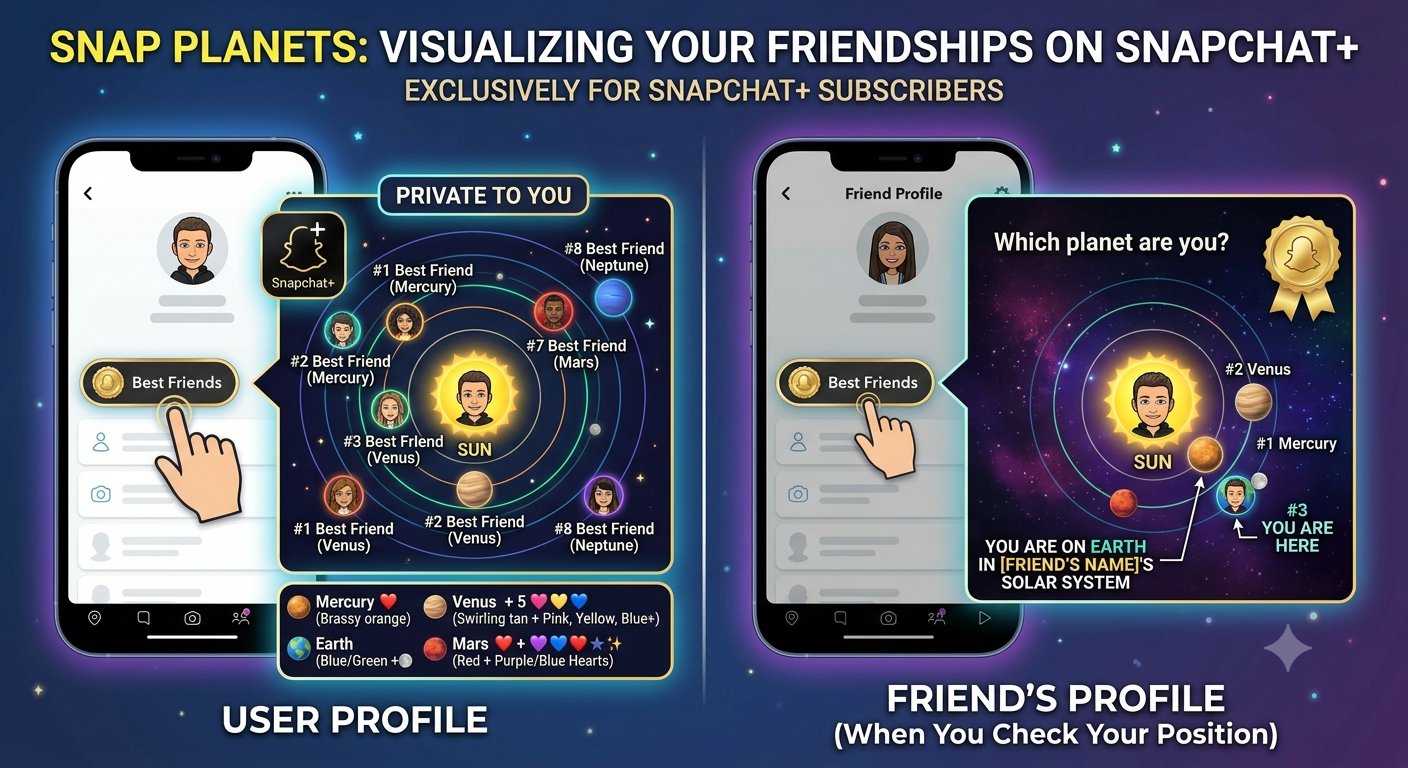
Unlike traditional friend lists, Snap Planets uses a solar system theme to rank your closest Snapchat friends. Each friend is represented by a different planet based on how often you interact with them. The closer the planet is to the Sun, the higher that friend ranks among your Best Friends. This creative approach makes it easier to understand your Snapchat relationships at a glance.
In this complete guide, you’ll learn what Snap Planets are, how the Friendship Solar System works, what every planet means, and how you can improve your ranking with your closest friends.
What Are Snap Planets?
Snap Planets are a Snapchat+ feature that visually represents your Best Friends using a miniature solar system. Instead of displaying a simple numbered list, Snapchat assigns each of your closest friends a planet based on your interaction frequency.
In this system, your Bitmoji acts as the Sun while your Best Friends become planets orbiting around it. The closer someone is to the Sun, the more frequently you communicate with that person through snaps, chats, and other interactions.
It’s important to understand that Snap Planets only appear for Snapchat+ subscribers. Users with the standard version of Snapchat won’t have access to the Friendship Solar System unless they upgrade to the premium subscription.
How the Snapchat Friendship Solar System Works
The Friendship Solar System is designed to make Best Friend rankings more interactive. Rather than simply assigning numbers, Snapchat transforms each friendship position into a recognizable planet from our solar system.
If someone appears as Mercury in your Friendship Solar System, that person is your closest Snapchat friend. Venus represents the second closest friend, Earth is third, and the remaining planets continue in order until Neptune, which represents the eighth Best Friend.
The ranking updates automatically based on your activity. Sending snaps, exchanging chats, reacting to stories, and maintaining streaks all contribute to your friendship ranking. Because interactions constantly change, the planets may also change over time.
Why Did Snapchat Introduce Snap Planets?
Snapchat has always focused on making communication feel more personal and engaging. Snap Planets fits perfectly with that philosophy by turning friendship rankings into an interactive visual experience instead of a basic list.
Gamification also plays a significant role. Many users enjoy checking whether a close friend has moved higher in their Friendship Solar System or trying to maintain their current ranking. This encourages regular conversations and helps increase overall engagement within the app.
The feature also adds exclusivity to Snapchat+. Since the Friendship Solar System is available only to subscribers, it provides an additional incentive for users considering the premium service.
Understanding Every Planet in Snap Planets
Each planet has its own position within the Friendship Solar System and represents a different Best Friend ranking. While the planet designs include unique colors, rings, and decorative hearts, their primary purpose is to indicate friendship order.
Mercury represents your number one Best Friend. This is the person you interact with more than anyone else on Snapchat. Frequent snaps, daily conversations, and long streaks often contribute to this position.
Venus represents your second closest friend. Although your interactions remain frequent, they occur slightly less often than with your Mercury friend. Many users see close family members or longtime friends occupying this spot.
Earth is assigned to your third closest friend. Even though this ranking is slightly lower, it still indicates regular communication and strong engagement through chats, snaps, and stories.
Mars, Jupiter, Saturn, Uranus, and Neptune Explained
The remaining planets continue the ranking system while still representing valuable friendships.
Mars indicates your fourth closest Best Friend. This usually reflects someone you communicate with consistently but perhaps not every single day.
Jupiter represents fifth place. Friends in this position often remain active contacts but may receive fewer daily interactions compared to those closer to the Sun.
Saturn, Uranus, and Neptune complete the Friendship Solar System by representing sixth, seventh, and eighth place respectively. While these friends still appear among your Best Friends, they generally receive less interaction than those positioned closer to the center.
How Snapchat Determines Planet Rankings
Many users assume that only sending snaps affects the Friendship Solar System, but Snapchat considers several different types of interaction when calculating rankings.
Regular snap exchanges remain one of the strongest signals. Users who consistently send photos or videos to one another generally maintain higher positions than those who communicate only occasionally.
Chats also contribute significantly. Frequent text conversations indicate ongoing communication, while replying to stories, sharing memories, maintaining Snap Streaks, and other engagement activities may also influence the overall friendship ranking.
Because Snapchat doesn’t publicly reveal its exact algorithm, users cannot predict rankings with complete certainty. However, consistent interaction across multiple features generally leads to stronger Best Friend positions.
Do Snap Planets Mean Someone Is Your Best Friend?
Yes—but only within Snapchat’s own ranking system. Snap Planets reflects how frequently two users interact inside the app, not necessarily the strength of a real-life friendship.
For example, someone you message daily on Snapchat may appear as Mercury even if you aren’t especially close outside the platform. Likewise, a close family member might appear farther away if you mostly communicate through phone calls or other messaging apps.
For that reason, it’s best to view the Friendship Solar System as a fun representation of Snapchat activity rather than a definitive measure of personal relationships.
Privacy and Visibility of Snap Planets
Privacy is an important part of the feature. The Friendship Solar System isn’t publicly visible to everyone on Snapchat.
Only eligible Snapchat+ users can access the feature, and the information is shown within the context of mutual friendships. This means random users cannot browse your friendship rankings or see the order of your Best Friends.
Snapchat also gives subscribers control over whether the Friendship Solar System feature is enabled. If you prefer not to use it, you can disable it within the Snapchat+ settings.
How to Access Snap Planets
Accessing Snap Planets is simple, but you must first have an active Snapchat+ subscription. Since this feature is exclusive to premium members, users with the free version of Snapchat won’t see the Friendship Solar System.
After subscribing to Snapchat+, open the Snapchat app and navigate to a friend’s profile. If both you and your friend are eligible for the feature, you’ll see a Best Friends or Friends badge. Tapping this badge opens the Friendship Solar System, where you’ll see your Bitmoji represented as the Sun and your friend’s assigned planet.
If the feature doesn’t appear immediately, make sure you’re using the latest version of Snapchat. App updates frequently introduce improvements and bug fixes, so keeping the application updated helps ensure all Snapchat+ features work properly.
How to Improve Your Planet Ranking
Many users wonder if it’s possible to move closer to the Sun in the Friendship Solar System. While Snapchat doesn’t reveal its exact ranking formula, consistent interaction generally improves your position over time.
Sending snaps regularly is one of the most effective ways to strengthen your friendship ranking. Photo and video snaps are a core part of Snapchat, so frequent exchanges often have a greater impact than occasional messages.
Text chats also matter. Having ongoing conversations, replying promptly, sharing stories, reacting to content, and maintaining Snap Streaks all demonstrate consistent engagement. The more naturally you interact with someone through the app, the more likely your ranking will improve.
It’s important to remember that rankings change automatically. If communication slows down, another friend who becomes more active may move ahead in the Friendship Solar System.
Common Misconceptions About Snap Planets
Although Snap Planets has become very popular, there are still several misunderstandings surrounding the feature. One of the biggest misconceptions is that the planets measure how much someone likes you. In reality, the system reflects interaction frequency rather than emotions or the quality of a friendship.
Another common myth is that only snaps affect rankings. While snaps play a significant role, other activities such as chats, story interactions, and Snap Streaks also contribute to the overall relationship score used by Snapchat.
Some users also believe the planets update instantly after sending a few snaps. In practice, rankings typically change over time as Snapchat evaluates ongoing activity rather than isolated interactions.
Benefits of Snap Planets
One of the biggest advantages of Snap Planets is that it adds a fun and visual way to understand your closest friendships. Instead of scrolling through a standard list, users can quickly recognize where someone ranks by looking at their assigned planet.
The feature also encourages consistent communication. Many users enjoy maintaining Snap Streaks, sending daily snaps, and staying connected with close friends, making the app more engaging and interactive.
For Snapchat+ subscribers, the Friendship Solar System is another premium benefit that enhances the overall experience. Alongside other exclusive features, it provides additional value for users who spend a lot of time on the platform.
Limitations of the Friendship Solar System
Despite its popularity, the Friendship Solar System isn’t perfect. One limitation is that it’s available only through Snapchat+, meaning free users cannot access the feature.
Another limitation is that rankings only represent activity within Snapchat. Someone who is an important friend in real life may appear farther away in the solar system simply because you communicate more often through text messages, phone calls, or other social media platforms.
Finally, because Snapchat doesn’t fully explain its ranking algorithm, users can only estimate how different interactions influence their planet positions. While this mystery adds some curiosity, it can also cause confusion when rankings change unexpectedly.
Tips for Using Snap Planets Responsibly
Although the Friendship Solar System is entertaining, it’s best to treat it as a fun feature rather than a measure of real-life relationships. Friendship is built through trust, communication, and shared experiences—not just app activity.
Avoid comparing your rankings with others or becoming overly focused on moving someone to Mercury. The system is designed to reflect how often people interact on Snapchat, not to determine the importance of friendships outside the app.
Using the feature responsibly helps keep the experience enjoyable. Instead of chasing rankings, focus on maintaining genuine conversations and sharing moments with the people who matter most.
The Future of Snap Planets
Snapchat regularly updates its premium features, so it’s possible that Snap Planets will continue evolving over time. Future updates could include additional customization options, new animations, or more detailed friendship insights for subscribers.
As augmented reality and artificial intelligence become increasingly integrated into social media, Snapchat may also introduce new ways to visualize friendships and interactions. Since the platform is known for experimenting with creative features, the Friendship Solar System could receive further enhancements in future releases.
Regardless of future changes, the feature has already become one of the most recognizable benefits of Snapchat+. Its combination of creativity, personalization, and gamification continues to make it popular among users worldwide.
Conclusion
Snap Planets is one of Snapchat’s most creative premium features, transforming the traditional Best Friends list into an engaging solar system. By assigning each of your closest friends a planet based on interaction frequency, the feature makes it easy to understand your Snapchat relationships in a fun and visually appealing way.
Although the Friendship Solar System is exclusive to Snapchat+ subscribers, it has become one of the platform’s most talked-about additions. From Mercury representing your closest friend to Neptune marking your eighth Best Friend, each planet offers a simple way to visualize your activity within the app.
Ultimately, it’s important to remember that Snap Planets reflects Snapchat interactions—not the true value of your friendships. Used with the right perspective, it adds an enjoyable layer to the app while encouraging meaningful communication with the people you connect with most often.
Frequently Asked Questions (FAQs)
1. What are Snap Planets?
Snap Planets are part of Snapchat+’s Friendship Solar System, where your eight closest friends are represented by planets based on how frequently you interact with them.
2. Do I need Snapchat+ to use Snap Planets?
Yes. The feature is exclusive to Snapchat+ subscribers and is not available in the free version of Snapchat.
3. What does Mercury mean in the Friendship Solar System?
Mercury represents your number one Best Friend—the person you interact with the most on Snapchat.
4. Can my planet ranking change?
Yes. Rankings update automatically based on your ongoing interactions, including snaps, chats, stories, and Snap Streaks.
5. Can other people see my Snap Planets?
The Friendship Solar System is not publicly visible to everyone. Access depends on Snapchat+’s feature availability and friendship status.
6. Do Snap Planets show who likes me the most?
No. They only reflect interaction frequency within Snapchat and should not be interpreted as a measure of real-life friendship or personal feelings.
7. How can I move closer to Mercury?
The best way is to interact consistently by sending snaps, chatting regularly, replying to stories, and maintaining active Snap Streaks over time.