


Electricity powers nearly every part of modern life, from the lights in our homes to the devices we use every day. Behind many of these electrical systems is the parallel circuit, a design that allows multiple components to operate independently while sharing the same power source. Although it may sound technical, understanding a parallel circuit is easier than most people think.
A parallel circuit is commonly found in homes, offices, vehicles, and electronic devices because it offers reliability and flexibility. Unlike other circuit designs, it allows electricity to flow through multiple paths, ensuring that one component can continue working even if another stops functioning.
In this complete guide, you’ll learn what a parallel circuit is, how it works, its advantages and disadvantages, where it’s used, and how it compares with other circuit types. Whether you’re a student, homeowner, or simply curious about electricity, this guide will help you understand the basics in a simple and practical way.
What Is a Parallel Circuit?
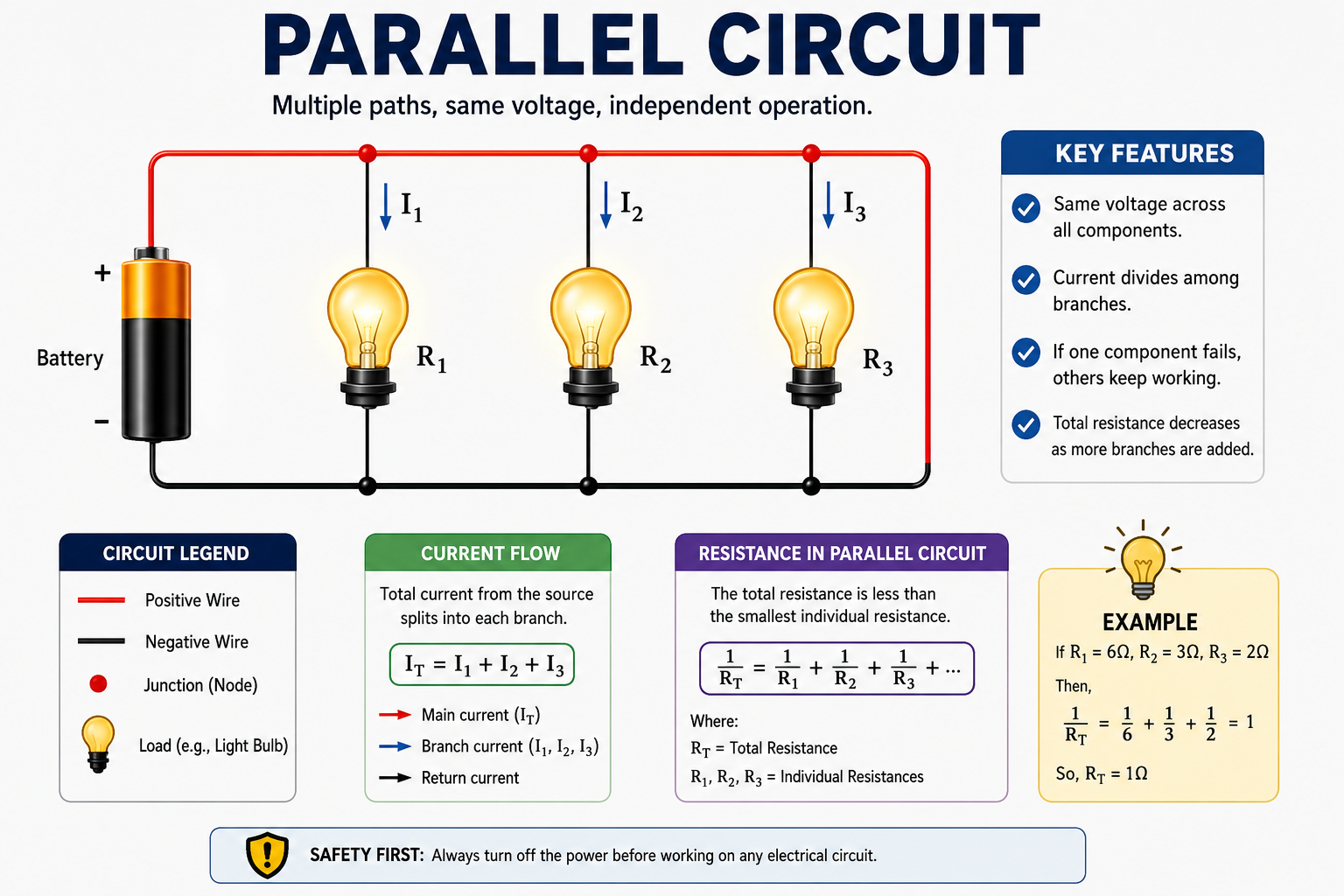
A parallel circuit is an electrical circuit in which two or more components are connected across the same voltage source. Instead of forcing electricity to travel through a single path, the circuit provides multiple branches, allowing electrical current to divide and flow through each branch independently.
One of the defining characteristics of a circuit is that every branch receives the same voltage. This means devices connected in parallel can operate at their intended voltage regardless of how many other devices are connected to the same power source.
Because each branch works independently, a problem in one part of the circuit usually doesn’t affect the others. For example, if one light bulb burns out in a parallel lighting system, the remaining bulbs continue to work normally. This reliability is one of the main reasons parallel circuits are widely used in everyday electrical systems.
How a Parallel Circuit Works
Understanding how a parallel circuit works starts with understanding the flow of electricity. When electrical current reaches a junction, it divides into multiple paths. The amount of current flowing through each branch depends on the resistance of the components connected to that branch.
Although the current splits between branches, the voltage across each branch remains the same. This is different from a series circuit, where voltage is shared among connected components. Because each device receives full supply voltage, equipment connected in parallel performs consistently.
After flowing through each branch, the current combines again before returning to the power source. This continuous flow allows multiple devices to operate simultaneously without interfering with one another, making a parallel circuit both practical and efficient for many applications.
Main Characteristics of a Parallel Circuit
One important characteristic of a parallel circuit is that it provides multiple pathways for electrical current. This design increases system reliability because electricity can continue flowing through the remaining branches even if one branch develops a fault.
Another key feature is equal voltage distribution. Every device connected within a parallel circuit experiences the same supply voltage, ensuring consistent operation across all connected components. Whether there are two devices or twenty, each branch receives the same voltage from the source.
Current behaves differently than voltage in a parallel configuration. While voltage stays constant, the total current supplied by the power source equals the sum of the currents flowing through each branch. This relationship is one of the fundamental principles used when analyzing electrical circuits.
Advantages of a Parallel Circuit
One of the greatest advantages of a parallel circuit is reliability. Since each branch functions independently, a failure in one component rarely affects the operation of the others. This makes parallel wiring ideal for homes, businesses, and public buildings where uninterrupted operation is important.
Another benefit is convenience. Individual devices can often be switched on or off without interrupting power to the rest of the circuit. For example, turning off a bedroom light doesn’t affect the lights in the kitchen or living room because they’re connected using a parallel design.
A parallel circuit also allows devices to perform at full efficiency because every component receives the correct voltage. Appliances, lighting systems, and electronic equipment operate as intended without sharing voltage with neighboring devices.
Common Applications of Parallel Circuits
The most familiar example of a parallel circuit is the electrical wiring found in homes. Wall outlets, ceiling lights, and household appliances are connected in parallel so they can operate independently. This ensures that unplugging one appliance doesn’t shut off power to the others.
Modern vehicles also rely heavily on parallel circuit designs. Headlights, dashboard displays, power windows, and entertainment systems often receive power through parallel connections, allowing each component to function even if another electrical device develops a fault.
Many commercial buildings, industrial systems, and electronic devices also use parallel wiring because it improves reliability and simplifies maintenance. From office lighting to computer equipment, the versatility of a circuit makes it one of the most widely used electrical configurations in the world.
Parallel Circuit vs. Series Circuit
A parallel circuit is often compared with a series circuit because both are fundamental methods of connecting electrical components. While they may appear similar at first glance, they behave very differently in real-world applications.
In a series circuit, electricity follows only one path. If one component fails, the entire circuit stops working because the electrical path is broken. In contrast, a parallel circuit offers multiple paths, allowing the remaining branches to continue operating even if one branch fails.
Another major difference involves voltage. Components in a series circuit share the available voltage, whereas every branch in a parallel circuit receives the full supply voltage. This difference explains why parallel wiring is preferred for homes, offices, and most modern electrical installations.
Disadvantages of a Parallel Circuit
Although a parallel circuit offers many advantages, it also has a few drawbacks that are worth understanding. One of the main disadvantages is that it generally requires more wiring than a series circuit. Since each component needs its own branch connection, installation can become more complex and expensive.
Another consideration is the total current drawn from the power source. As more devices are added to a parallel circuit, the overall current demand increases. If the circuit is overloaded beyond its designed capacity, it may trip a circuit breaker or blow a fuse to protect the wiring.
Maintenance can also be slightly more challenging because multiple branches must sometimes be inspected individually to locate a fault. However, the increased reliability and flexibility usually outweigh these disadvantages in most practical applications.
Resistance in a Parallel Circuit
Resistance behaves differently in a parallel circuit than it does in a series circuit. Instead of adding together, the total resistance decreases as additional branches are connected. This happens because electricity has more paths through which it can flow.
A lower total resistance allows the circuit to draw more current from the power source. While this is beneficial for powering multiple devices simultaneously, it also highlights the importance of using wiring and protective devices that can safely handle the increased electrical load.
Understanding how resistance changes in a parallel circuit helps electricians and engineers design safe electrical systems. Proper calculations ensure that wires, breakers, and other components operate within their rated limits, reducing the risk of overheating or equipment failure.
Safety Tips When Working with Parallel Circuits
Safety should always be the top priority when working with a parallel circuit or any electrical system. Before inspecting or modifying a circuit, always switch off the power at the main breaker and verify that the circuit is no longer energized using appropriate testing equipment.
Use electrical components that match the required voltage and current ratings. Installing undersized wires or incorrect circuit breakers can lead to overheating, equipment damage, or electrical fires. Following electrical codes and manufacturer recommendations helps ensure a safe installation.
If you’re unfamiliar with electrical work, it’s best to leave complex installations and repairs to qualified professionals. While learning about a parallel circuit is valuable, working with live electrical systems without proper training can be dangerous.
Common Mistakes Beginners Make
One common misunderstanding is believing that adding more devices to a parallel circuit reduces the voltage supplied to each device. In reality, each branch continues to receive the full supply voltage as long as the power source and wiring are functioning correctly.
Another mistake is confusing current with voltage. Beginners often assume both values remain constant throughout the circuit. In a parallel circuit, voltage stays the same across every branch, while the current divides according to the resistance of each branch.
Some people also overlook the importance of load limits. Connecting too many high-power devices to the same parallel circuit can exceed its safe current capacity, causing breakers to trip or creating potential safety hazards.
Real-World Examples of Parallel Circuits
One of the easiest places to find a parallel circuit is inside a typical home. Every room usually contains multiple electrical outlets and light fixtures connected in parallel. This arrangement allows each appliance or light to operate independently without affecting the others.
Another excellent example is modern office buildings. Computers, printers, lighting systems, and networking equipment all rely on parallel wiring so that one malfunctioning device doesn’t interrupt the operation of the entire workspace.
Holiday lighting systems designed for indoor use often use a parallel circuit as well. Unlike older series-connected light strings, modern parallel designs allow the remaining lights to continue working even if a single bulb fails, making them more reliable and convenient.
Frequently Asked Questions
Many people ask why homes use a parallel circuit instead of a series circuit. The main reason is reliability. In a parallel arrangement, every appliance receives the proper voltage and continues operating independently if another device is turned off or stops working.
Another common question is whether a parallel circuit is more efficient. While efficiency depends on the specific application, parallel circuits are generally more practical for powering multiple devices because they provide consistent voltage and greater flexibility.
People also wonder whether a parallel circuit is difficult to understand. Fortunately, the basic concept is straightforward: electricity simply has more than one path to travel. Once you understand that voltage remains constant while current is divided among the branches, the behavior of parallel circuits becomes much easier to visualize.
Conclusion
A parallel circuit is one of the most important concepts in electricity because it forms the foundation of modern electrical systems. By providing multiple current paths and maintaining the same voltage across every branch, it delivers the reliability and flexibility needed for homes, workplaces, vehicles, and countless electronic devices.
Although a parallel circuit requires more wiring and careful attention to current capacity, its advantages far outweigh its limitations. The ability to operate devices independently, maintain consistent performance, and continue functioning even when one component fails makes it the preferred choice for most electrical installations.
Whether you’re learning about electricity for school, improving your technical knowledge, or simply satisfying your curiosity, understanding a parallel circuit gives you a stronger appreciation of how everyday electrical systems work. With the concepts covered in this guide, you’ll have a solid foundation for exploring more advanced topics in electronics and electrical engineering.